

Medical weight loss has changed significantly with the introduction of medications such as semaglutide and tirzepatide. These medications can help eligible patients manage appetite, reduce food intake, and achieve meaningful weight loss when they are used as part of a medically supervised treatment plan.
If you are researching semaglutide vs tirzepatide, you may be wondering which medication works better, how they differ, what side effects to expect, and which option may be more appropriate for your health and weight-loss goals.
At Eclat Medical Aesthetics in Alpharetta, medical weight loss is approached as an individualized process rather than a one-size-fits-all program. Eclat offers physician-led weight-loss consultations that may include semaglutide or tirzepatide for appropriate candidates, while alternative prescription weight-management options may also be considered when injectable medications are not suitable.
Both medications can be effective, but they do not work in exactly the same way. Understanding the differences can help you have a more informed conversation with your healthcare provider about which medical weight-loss approach may fit you.
What Is Semaglutide?

Semaglutide belongs to a class of medications known as GLP-1 receptor agonists. It works by activating receptors for glucagon-like peptide-1, a naturally occurring hormone involved in appetite, food intake, and blood-sugar regulation.
For chronic weight management, semaglutide is available under the brand name Wegovy for eligible patients. Current FDA labeling indicates that Wegovy is used along with a reduced-calorie diet and increased physical activity to reduce excess body weight and maintain weight reduction long term in adults with obesity or adults with overweight who have at least one weight-related medical condition.
Semaglutide is also found in Ozempic, but the names are not interchangeable. Ozempic is FDA-approved primarily for people with type 2 diabetes and related cardiovascular and kidney-risk indications; it is not the semaglutide brand specifically approved for chronic weight management.
This distinction is important when patients search for Ozempic vs Mounjaro weight loss, because the active ingredients may also be marketed under different brand names for different FDA-approved uses.
What Is Tirzepatide?
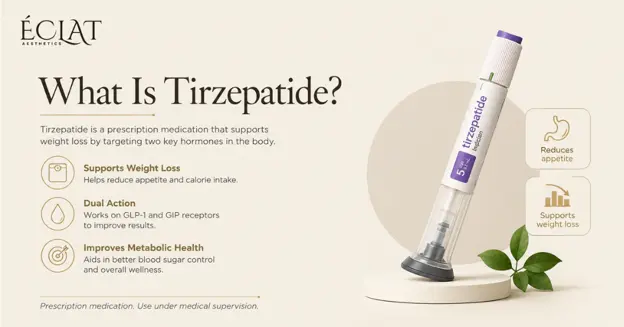
Tirzepatide works somewhat differently from semaglutide.
Instead of targeting only the GLP-1 receptor, tirzepatide activates both GLP-1 and GIP receptors. GIP stands for glucose-dependent insulinotropic polypeptide, another hormone involved in metabolic and blood-sugar regulation. The combined activity of tirzepatide can reduce food intake and support substantial weight reduction in appropriate patients.
For chronic weight management, tirzepatide is marketed as Zepbound. The FDA has approved Zepbound, together with a reduced-calorie diet and increased physical activity, for long-term weight management in adults with obesity or certain adults with overweight and a weight-related condition.
Tirzepatide is also sold under the brand name Mounjaro, which is approved for improving blood-sugar control in adults with type 2 diabetes. The FDA has specifically noted that Mounjaro itself is not approved as a weight-loss drug; Zepbound is the tirzepatide product approved for chronic weight management.
Semaglutide vs Tirzepatide: What Is the Main Difference?
The biggest difference in a semaglutide vs tirzepatide comparison is how the medications interact with hormone receptors.
Semaglutide primarily activates the GLP-1 receptor. Tirzepatide activates both GLP-1 and GIP receptors.
Both medications can decrease appetite and food intake, but tirzepatide's dual mechanism may contribute to differences in average weight loss between the two medications.
That does not automatically mean tirzepatide is the best medication for every patient. Weight-loss effectiveness is only one part of choosing treatment. Medical history, side effects, existing health conditions, medication interactions, treatment tolerance, goals, and access all matter.
Which Causes More Weight Loss: Semaglutide or Tirzepatide?
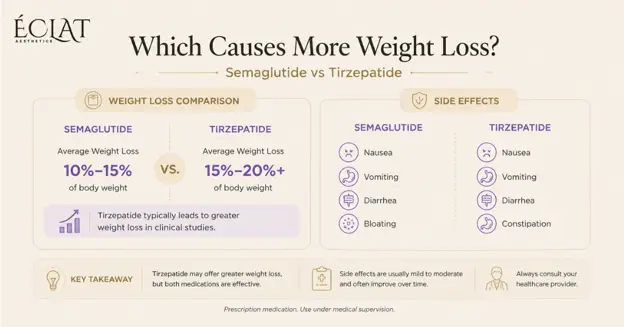
Recent head-to-head research provides useful information.
The SURMOUNT-5 trial directly compared tirzepatide with semaglutide in adults with obesity but without diabetes. After 72 weeks, participants receiving tirzepatide experienced a greater average reduction in body weight than those receiving semaglutide. Researchers concluded that tirzepatide was superior to semaglutide for reducing body weight and waist circumference in this trial population.
In that study, average weight reduction was approximately 20.2% with tirzepatide compared with 13.7% with semaglutide at 72 weeks. These are averages from a controlled clinical trial and should not be interpreted as a prediction of what any individual patient will lose.
The trial is helpful because it directly compared the medications under similar conditions rather than comparing results from two unrelated studies.
Still, choosing medication based only on the highest average percentage can be misleading. Some patients respond very well to semaglutide, while others may tolerate tirzepatide better or achieve a stronger response with it. Others may not be appropriate candidates for either medication.
The right question is therefore not simply, "Which drug loses more weight?" It is, "Which treatment provides the best balance of effectiveness, safety, tolerability, and sustainability for me?"
Understanding the Ozempic vs Mounjaro Weight Loss Question
Patients frequently search for Ozempic vs Mounjaro weight loss, but there is an important distinction behind those names.
Ozempic contains semaglutide, while Mounjaro contains tirzepatide. Both are primarily branded and FDA-approved for type 2 diabetes rather than chronic weight management. For weight management, the corresponding FDA-approved brands are Wegovy for semaglutide and Zepbound for tirzepatide.
This does not change the active ingredient being compared, but it matters medically and legally because different products may have different approved indications, doses, and prescribing information.
For someone primarily seeking medical weight management rather than diabetes treatment, discussing semaglutide and tirzepatide with a qualified healthcare provider is more useful than choosing treatment based on a social-media comparison of Ozempic and Mounjaro.
How Do These Medications Help With Weight Loss?
Semaglutide and tirzepatide affect biological pathways involved in appetite and food intake.
Semaglutide's GLP-1 activity helps regulate appetite and can make patients feel satisfied with less food. Current Wegovy labeling includes long-term weight reduction as an approved use when treatment is combined with reduced calorie intake and increased physical activity.
Tirzepatide activates both GLP-1 and GIP receptors and reduces food intake. FDA information for Zepbound similarly describes its use alongside a reduced-calorie diet and increased physical activity for chronic weight management.
These medications are therefore not simply "fat-burning injections." Their effects involve appetite regulation, food intake, and metabolic pathways, and they are intended to be used within a broader medical weight-management strategy.
Which Medical Weight Loss Option Fits You?

The strongest medication on paper is not necessarily the best medication for your body.
At Eclat Medical Aesthetics in Alpharetta, medical weight loss begins with an evaluation of your health history, previous weight-loss efforts, medications, goals, and suitability for prescription treatment. Eclat's program includes physician-supervised options such as semaglutide and tirzepatide for appropriate candidates.
A personalized plan can help determine whether a GLP-1-based medication is appropriate and which option makes the most sense for your individual situation.
Schedule a consultation with Eclat Medical Aesthetics to learn more about Botox for excessive underarm sweating and your personalized treatment options.
How Quickly Do Semaglutide and Tirzepatide Work?
Medical weight loss with either medication is gradual.
Patients typically begin at a lower dose and increase the dose according to the prescribed escalation schedule. This approach allows the body to adjust and can help manage gastrointestinal side effects.
In the SURMOUNT-5 comparison study, both semaglutide and tirzepatide were gradually increased toward their maximum tolerated doses rather than started at the full maintenance dose.
Weight changes also continue over many months. Clinical trials assessing these medications commonly measure results after a year or longer, which is very different from promises of rapid weight loss over a few weeks.
Medical weight management should be viewed as an ongoing process rather than a short-term crash diet.
Semaglutide vs Tirzepatide Side Effects
Both medications commonly cause gastrointestinal side effects.
In the direct SURMOUNT-5 comparison, the most common adverse events for both semaglutide and tirzepatide involved the gastrointestinal system, and most were mild to moderate and occurred mainly while doses were being increased.
Depending on the medication and patient, symptoms can include nausea, vomiting, diarrhea, constipation, abdominal discomfort, or changes in appetite.
The FDA prescribing information for both Wegovy and Zepbound also contains warnings regarding potentially serious problems such as pancreatitis, gallbladder disease, dehydration-related kidney injury, and serious gastrointestinal reactions.
This is one reason medical supervision matters. Your provider can review symptoms, adjust dosing when appropriate, and determine whether a medication should be continued or changed.
Who Should Not Take Semaglutide or Tirzepatide?
Neither medication is appropriate for everyone.
Both Wegovy and Zepbound carry boxed warnings related to thyroid C-cell tumors observed in animal studies. It is unknown whether these medications cause medullary thyroid carcinoma in humans. Both are contraindicated in people with a personal or family history of medullary thyroid carcinoma or Multiple Endocrine Neoplasia syndrome type 2.
Your provider should also review other medical factors, including gastrointestinal disease, pancreatic or gallbladder problems, kidney concerns, diabetes medications, pregnancy plans, previous reactions to similar medications, and other relevant health conditions.
This is why purchasing or using a GLP-1 medication without appropriate clinical screening can create unnecessary risk.
What About Pregnancy?
Weight-loss medications are not intended for weight reduction during pregnancy.
Current prescribing information for semaglutide includes specific pregnancy guidance, and weight-loss treatment should be discontinued when pregnancy is recognized. Semaglutide also has a relatively long elimination period, so prescribing information advises stopping it in advance of a planned pregnancy.
Patients who are pregnant, trying to become pregnant, or breastfeeding should discuss their situation with the prescribing clinician before starting or continuing medical weight-loss medication.
Are Semaglutide and Tirzepatide Meant to Be Short-Term Treatments?
Obesity is often managed as a chronic condition, and GLP-1-based treatment may require a long-term strategy.
Research with tirzepatide has shown that continuing therapy can help maintain weight reduction, while stopping treatment may be followed by weight regain in some patients. Similar patterns have been observed across anti-obesity medication studies.
This does not mean that every patient must remain on the same medication forever. It means that your provider should help you think beyond reaching a target number on the scale.
A good medical weight-loss plan should also consider how results will be maintained, whether medication remains appropriate, and how nutrition, physical activity, sleep, and other health behaviors fit into long-term management.
Is Tirzepatide Better Than Semaglutide?
If "better" means greater average weight loss in a direct clinical trial, tirzepatide produced greater average weight reduction than semaglutide in SURMOUNT-5.
But that does not make tirzepatide universally better.
A patient may respond well to semaglutide and have no need to switch. Another person may experience side effects with one medication but tolerate the other. Cost, insurance coverage, existing medical conditions, cardiovascular considerations, diabetes status, and long-term treatment goals may also influence the decision.
Semaglutide also has important FDA-approved indications beyond weight reduction. For example, Wegovy is approved to reduce the risk of cardiovascular death, heart attack, and stroke in adults with established cardiovascular disease and obesity or overweight.
The best medication is therefore the one that appropriately addresses your overall medical needs—not simply the one associated with the largest average weight-loss number.
What Is a GLP-1 Comparison Really Measuring?
When reading a GLP-1 comparison, it is important to understand what is being compared.
Different studies may include different patients, medication doses, treatment durations, diabetes status, dietary interventions, and definitions of success.
That is why directly comparing a semaglutide percentage from one trial with a tirzepatide percentage from an unrelated trial can be misleading.
The SURMOUNT-5 trial is particularly useful because participants were directly randomized to tirzepatide or semaglutide within the same study. Even then, its results describe averages among adults with obesity without diabetes and do not guarantee an individual's result.
Clinical trial percentages are useful for understanding what medications can achieve at a population level. They are not personal weight-loss calculators.
Do You Still Need Diet and Exercise With GLP-1 Medications?
Yes. FDA-approved weight-management indications for both Wegovy and Zepbound specify that the medication should be used together with a reduced-calorie diet and increased physical activity.
The medications can make calorie reduction easier for some patients by reducing hunger and food intake, but healthy behaviors remain an important part of maintaining health and supporting sustainable results.
A medically supervised program can also focus on preserving lean body mass, obtaining adequate nutrition, staying physically active, and building habits that remain useful throughout and after medication treatment.
Why Medical Supervision Matters
The growing popularity of GLP-1 medications has also led to concerns about unapproved and fraudulent products.
In June 2026, the FDA warned about fraudulent compounded semaglutide and tirzepatide products being marketed in the United States, including products carrying false pharmacy information. The agency has emphasized safety concerns associated with unapproved versions of GLP-1 medications.
Medical weight loss should therefore involve more than simply obtaining an injection.
Appropriate care includes reviewing whether you are a candidate, selecting the right medication and dose, monitoring side effects, evaluating progress, and adjusting treatment when necessary.
Eclat Medical Aesthetics describes its weight-loss service as a physician-led program medical supervision
in which patients are medically assessed before medication recommendations are made.
What If You Cannot Take Semaglutide or Tirzepatide?
GLP-1-based medications are not the only prescription options for weight management.
Some patients may not be candidates because of medical history, medication intolerance, side effects, or other considerations.
Eclat Medical Aesthetics notes that its medical weight-loss program may also consider non-injectable prescription options following medical evaluation when GLP-1 medications are not suitable.
This is another reason a consultation is more useful than deciding in advance that you specifically need semaglutide or tirzepatide.
The goal should be finding an appropriate treatment strategy, not simply obtaining a particular medication because it is popular online.
Schedule a consultation with Eclat Medical Aesthetics to learn more about Botox for excessive underarm sweating and your personalized treatment options.
Start a Personalized Medical Weight Loss Plan in Alpharetta
If you have been comparing semaglutide vs tirzepatide, the next step is not choosing a winner based on a percentage you found online. It is determining whether you are an appropriate candidate and which option fits your medical history, weight-loss goals, and long-term health plan.
At Eclat Medical Aesthetics in Alpharetta, medical weight-loss programs are physician led and may include semaglutide, tirzepatide, or other medical weight-management options depending on the patient's individual needs.
Frequently Asked Questions
What is the main difference between semaglutide and tirzepatide?
Semaglutide primarily activates the GLP-1 receptor, while tirzepatide activates both GLP-1 and GIP receptors. Both can help reduce appetite and food intake, but their mechanisms are not identical.
Which is better for weight loss, semaglutide or tirzepatide?
In the SURMOUNT-5 head-to-head trial involving adults with obesity without diabetes, tirzepatide resulted in greater average weight loss than semaglutide after 72 weeks. However, that does not mean tirzepatide is automatically the better choice for every patient. Medical history, side effects, treatment response, and individual goals should guide the decision.
How much weight can you lose with semaglutide vs tirzepatide?
In SURMOUNT-5, average weight reduction after 72 weeks was approximately 20.2% with tirzepatide compared with 13.7% with semaglutide. These are study averages rather than guaranteed individual results.
Is Ozempic the same as semaglutide?
Ozempic contains semaglutide, but semaglutide is also used in other products. Ozempic is primarily FDA-approved for type 2 diabetes and related risk reduction, while Wegovy is the semaglutide product approved for chronic weight management in eligible patients.
Is Mounjaro the same as tirzepatide?
Mounjaro contains tirzepatide and is approved for type 2 diabetes. Zepbound also contains tirzepatide but is FDA-approved for chronic weight management in eligible patients.