

PRP hair treatment has become a popular nonsurgical option for people who want to support hair growth using components derived from their own blood. One of the most common questions patients ask is how many PRP sessions they need before they see regrowth. The answer is not the same for everyone.
Hair grows slowly and the response to PRP develops gradually. Most patients need a series of treatments rather than one session. Visible changes may take several months because the hair growth cycle itself takes time.
At Éclat Medical Aesthetics in Alpharetta PRP can be used as part of a personalized approach to hair restoration. Understanding what may happen from month to month can help you develop realistic expectations before starting treatment.
What Is PRP Hair Treatment?
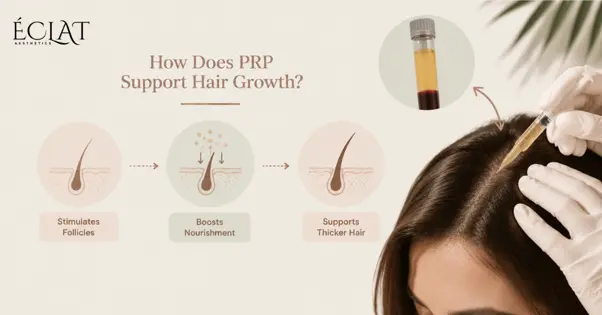
PRP stands for platelet rich plasma. PRP is created from a small sample of your own blood. The blood is processed to concentrate platelets within the plasma. Platelets contain growth factors that play a role in the body's natural repair processes.
During PRP hair treatment the prepared plasma is placed into areas of the scalp where hair thinning is being treated. The goal is to support the scalp environment and encourage healthier hair growth.
PRP does not create instant hair growth. Instead, the treatment works as part of a gradual process. This is one reason why patience is important when undergoing PRP for hair loss.
How Does PRP Support Hair Growth?
Hair follicles go through different phases of growth and rest. When follicles become affected by factors associated with hair thinning, they may produce finer hairs or spend less time in the active growth phase.
PRP is intended to support the environment around the hair follicles. The growth factors within platelet rich plasma may help support cellular activity and tissue repair.
The exact response varies between patients. PRP is therefore not a guaranteed cure for every type of hair loss. The cause of your hair loss matters when determining whether PRP is an appropriate treatment.
When Do You Start Seeing Results from PRP Hair Treatment?
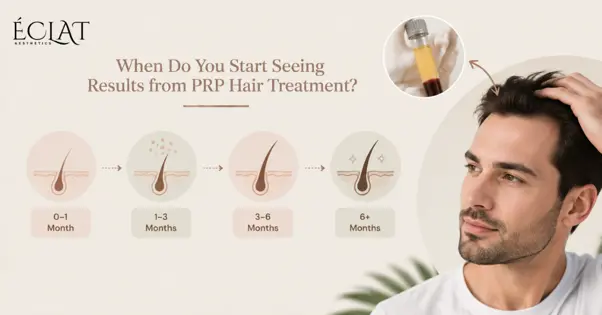
Some patients notice changes earlier than others. Early changes may involve reduced shedding or improved hair quality.
You may therefore complete multiple PRP sessions before seeing significant changes in hair density. A month-by-month timeline can help explain why this happens.
Month 1: Starting Your PRP Hair Journey
The first month is primarily about beginning the treatment process. Your provider evaluates your scalp and hair loss pattern before treatment. This assessment helps determine whether PRP may be appropriate for your concerns.
Your first PRP session is then performed according to your personalized treatment plan. You should not expect dramatic regrowth during the first few weeks. Hair follicles require time to respond. At this stage your main goal is to complete your recommended treatment schedule and follow the aftercare instructions provided by your provider.
What Might You Notice During Month 1?
You may experience temporary scalp tenderness or mild redness after treatment. These effects generally settle as the scalp recovers.
Some patients may notice changes in shedding patterns, but it is too early to judge the overall result based on the first month alone.
Month 2: Building the Treatment Response
By the second month you may have completed another PRP session depending on your treatment schedule. The scalp continues to undergo the biological response associated with treatment. You may still not see obvious new hair growth. This is completely understandable because hair growth takes time.
Some patients may notice less shedding or changes in hair texture. Others may not notice a visible difference yet. Both experiences are possible. The absence of dramatic changes at this stage does not necessarily mean the treatment will not work for you.
Month 3: Early Signs of Improvement
Around the third month some patients may begin noticing early changes.
These can include:
- Reduced hair shedding
- Fine new hairs
- Improved hair texture
- A healthier looking scalp
- Slightly improved hair density
Not everyone will notice all of these changes. The amount of regrowth depends on factors such as the cause of hair loss and the condition of the hair follicles. This is also a stage when progress photos can be useful.
Taking photographs under similar lighting and from similar angles can make gradual changes easier to identify.
Month 4: More Noticeable Changes
By month four the effects may become more noticeable for some patients. Hair follicles that respond to treatment may begin producing stronger and more visible hairs. The overall density may gradually improve.
However, hair growth remains a slow process. You may still have areas of thinning. This does not necessarily mean that the treatment has failed. The response can continue to develop over the following months.
Month 5: Assessing Hair Density
By the fifth month you may have a better sense of how your scalp is responding. Some patients notice that their hair looks fuller. Others may notice more coverage in areas that previously looked thin. The changes may still be subtle.
Your provider may compare your current hair density with photographs taken before treatment. This can help provide a more objective assessment. It is easy to overlook gradual improvements when you see your hair every day.
Month 6: Reviewing Your Progress
Around six months is an important point for assessing progress. By this stage many patients have had enough time to see whether their hair is responding to treatment.
You may notice:
- Increased hair density
- Thicker appearing strands
- Reduced visibility of the scalp
- Improved overall hair coverage
Your results will depend on your individual situation. Some patients may see more noticeable changes than others.
Your provider can evaluate your progress and discuss whether maintenance treatment or additional sessions may be appropriate.
Month 7 and Beyond: Maintaining Your Results
Hair restoration is often a long-term process. Even after an initial series of PRP sessions some patients may benefit from maintenance treatments. Hair loss can continue because the underlying factors contributing to thinning may still be present.
Maintenance treatment can therefore be discussed as part of a long-term plan. The frequency depends on your individual response and the cause of your hair loss.
Ready to Address Hair Thinning?
If you are noticing thinning hair or increased shedding PRP may be an option worth discussing. Éclat Medical Aesthetics in Alpharetta can evaluate your concerns and help determine whether PRP hair treatment may fit your goals.
Why Does PRP Hair Regrowth Take So Long?
Hair grows through a natural cycle. New hair does not appear overnight. Even when a treatment successfully supports the follicle it takes time for the follicle to produce a visible strand.
The new hair may initially be very fine. Over time it may become thicker. This gradual process is why realistic expectations are essential.
What Factors Affect PRP Hair Results?
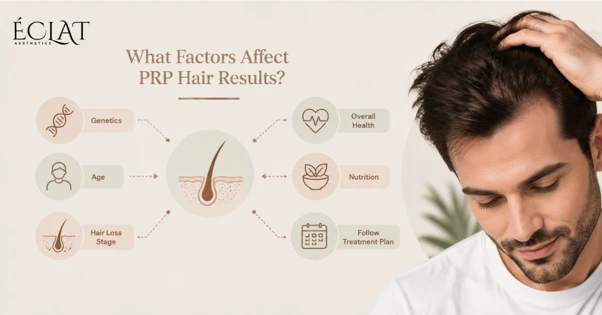
Several factors can influence how well you respond to PRP.
Cause of Hair Loss
PRP may be more appropriate for certain types of hair thinning than others. Determining the cause of your hair loss is therefore important.
Stage of Hair Loss
The condition of the hair follicles can influence treatment response. Early intervention may be beneficial when follicles are still capable of producing hair. Advanced hair loss may require a different approach.
Number of Sessions
A single treatment may not provide the same potential benefit as a complete treatment series. Your provider can recommend the number of sessions based on your individual needs.
Overall, Health
Your overall health and nutritional status can also influence hair growth. If you have an underlying medical or nutritional issue contributing to hair loss, then addressing that issue may be important.
Genetics
Genetics play an important role in many types of hair loss. PRP cannot change your genetic makeup. It may support the follicles, but the underlying cause still matters.
- Lifestyle
Sleep and nutrition as well as stress can influence overall hair health. A healthy lifestyle can support your general wellbeing and may complement your hair restoration plan.
How Do You Know If PRP Is Working?
Your provider may look for several signs of improvement.
These can include:
- Reduced shedding
- Increased hair density
- New fine hairs
- Thicker existing hairs
- Improved scalp coverage
- Better overall hair appearance
Results are gradual. You may not notice a dramatic change from one week to the next.
What If You Do Not See Results After Several Months?
If you do not notice improvement after completing the recommended treatment series you should speak with your provider.
The cause of your hair loss may need to be reassessed.
Other factors such as nutritional deficiencies or hormonal changes may need consideration.
Your provider can determine whether additional PRP sessions are appropriate or whether another treatment approach should be considered.
Is PRP Hair Restoration Permanent?
PRP does not necessarily provide permanent results. Hair loss can be influenced by ongoing genetic and hormonal factors. Some patients may benefit from maintenance treatments. The appropriate maintenance schedule varies. Your provider can help you develop a long-term plan based on your response.
Why Choose Éclat Medical Aesthetics for PRP Hair Treatment?
Hair restoration should begin with understanding your individual concerns. At Éclat Medical Aesthetics in Alpharetta patients can discuss hair thinning and explore treatment options in a professional aesthetic environment.
A personalized approach allows your provider to consider your hair loss pattern and treatment goals. Rather than expecting instant regrowth you can develop a realistic timeline based on your individual situation.
Final Thoughts
If you are expecting dramatic regrowth immediately after your first session you may be disappointed. Hair follicles need time to respond, and new hair needs time to grow. Around months three and four some patients may begin noticing early changes. By months five and six the improvement may become easier to evaluate. Beyond six months your provider can assess your response and determine whether maintenance treatment may be appropriate.
PRP may be a useful option for selected patients with thinning hair, but it is not a universal solution for every type of hair loss. At Éclat Medical Aesthetics in Alpharetta a personalized consultation can help you understand your options and create a treatment plan based on your individual hair concerns.
Want to Track Your Hair Regrowth Progress?
Hair restoration takes time. Knowing what to expect can make the process easier to understand. Éclat Medical Aesthetics can help you develop a personalized treatment plan and monitor your progress over time.
Frequently Asked Questions
How many PRP sessions do I need for hair regrowth?
The number varies between patients. Many treatment plans begin with a series of sessions followed by maintenance treatments. Your provider will determine the appropriate schedule based on your hair loss and treatment goals.
How soon can I see results from PRP hair treatment?
Early changes may appear within a few months. More noticeable improvement often takes several months because hair grows slowly.
Can I see hair regrowth after one PRP session?
Some patients may notice early changes after one session, but a single treatment is generally not enough to assess the full potential response. A series of treatments may be recommended.
What happens after the first PRP hair session?
The scalp begins the recovery and biological response process. You may experience temporary tenderness or redness. Visible hair growth usually takes longer to develop.
When will I see new hair after PRP?
Some patients may begin noticing fine new hairs around the third or fourth month. The timeline varies and not everyone experiences the same pattern of growth.