
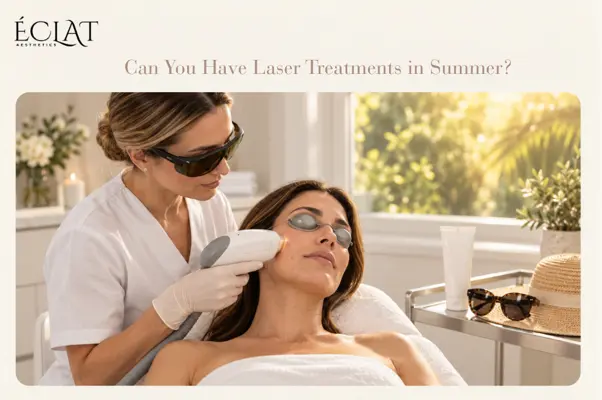
Laser treatments can help address a range of skin concerns including uneven pigmentation, sun damage, acne scars, unwanted hair, redness, and signs of skin aging. Because laser energy interacts with specific structures within the skin, careful preparation and aftercare are important for achieving the best possible experience.
At Éclat Medical Aesthetics, each treatment plan can be tailored to your skin and your individual goals. Understanding the right sun exposure precautions before and after your treatment can help you decide when laser treatment may be appropriate for your skin.
Can you have laser treatments in summer?
The answer depends on the type of laser treatment and how much sun exposure your skin receives. Some laser treatments can be performed safely during summer when appropriate precautions are followed. Other treatments may be better scheduled when sun exposure is lower.
Sun exposure is one of the most important factors to consider before and after laser treatment. Your skin can become more sensitive after a laser procedure. UV exposure during this period may increase the risk of irritation, pigmentation, and other unwanted reactions.
Understanding the right sun exposure rules can help you protect your skin and support a smoother recovery.
Can You Get Laser Treatments During Summer?
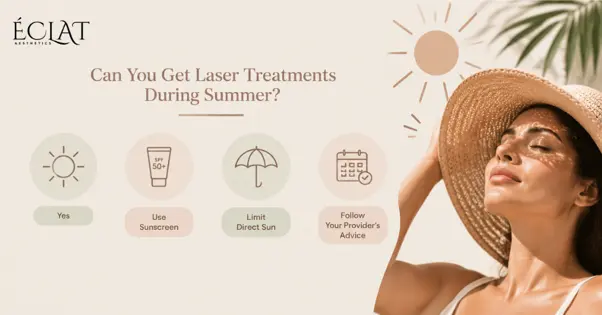
Yes. Many people can have laser treatments during summer. However, summer treatment requires more attention to sun protection.
Laser treatments work by delivering controlled energy to specific targets in the skin. Depending on the treatment, the energy may target pigment, blood vessels, hair follicles, or water within the skin. The skin can become temporarily more sensitive during the healing process.
Your provider may recommend changing the timing of your treatment if you have recently developed a tan or if you expect significant sun exposure after the procedure. The type of laser also matters. Some treatments are more aggressive and require a longer period of avoiding direct sun.
A professional consultation is important before scheduling a summer laser treatment. Your provider can evaluate your skin and determine whether the treatment is appropriate for the current season and your lifestyle.
Why Is Sun Exposure a Concern Before Laser Treatment?
Sun exposure can affect how your skin responds to laser energy. When your skin is exposed to ultraviolet radiation, it produces more melanin. This can make the skin darker or more unevenly pigmented. If the skin has recently tanned, then there may be more pigment present when laser treatment is performed.
Depending on the laser, this can increase the risk of unwanted pigmentation or irritation. For this reason, many laser treatments require you to avoid tanning before your appointment.
Your provider may also recommend postponing treatment if your skin is sunburned or significantly tanned. Treating irritated skin may increase discomfort and may interfere with the normal healing process. The exact recommendation depends on the treatment you are receiving and your individual skin.
How Long Should You Avoid the Sun Before Laser Treatment?
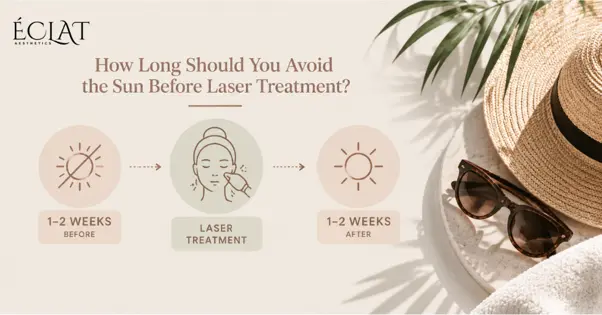
The recommended period varies by treatment. Many providers recommend limiting significant sun exposure for at least two weeks before certain laser procedures. More intensive treatments, including advanced laser treatments, may require a longer period of sun avoidance.
The goal is not simply to stay indoors. It is to prevent tanning and protect your skin from unnecessary UV exposure. If you spend a lot of time outdoors, then your provider may recommend additional precautions before treatment.
These may include:
- Wearing broad spectrum sunscreen every day
- Wearing a wide brimmed hat
- Seeking shade when possible
- Avoiding tanning beds
- Avoiding intentional tanning
- Covering exposed skin
- Rescheduling treatment if you develop a sunburn
Always follow the specific preparation instructions provided for your laser treatment.
Can You Have Laser Treatment If You Already Have a Tan?
A recent tan may affect whether you are a good candidate for certain laser treatments. Some lasers interact with melanin in the skin. If your skin contains more pigment because of tanning, then the laser may interact with that pigment as well as the intended treatment target.
This can increase the risk of side effects. If you have recently been on vacation or spent significant time outdoors, it is important to tell your provider. Do not try to hide a tan before your appointment.
Your provider may recommend waiting until the tan has faded before performing the treatment. This is especially important if the treatment is designed to target pigmentation, like chemical peels or skin resurfacing.
What If You Have a Sunburn Before Your Laser Appointment?
A sunburn is a reason to postpone many laser treatments. Sunburned skin is already irritated and healing. Laser energy can add additional stress to the skin. If you develop a sunburn before your appointment, contact your provider. They can advise you about whether your treatment should be rescheduled.
Do not attempt to treat sunburned skin with additional procedures simply because your appointment is already scheduled. Allow your skin to recover first.
What Happens If You Get Sun Exposure After Laser Treatment?
Sun exposure after laser treatment can increase the risk of unwanted pigmentation and irritation. The skin may be more sensitive during the healing period. UV exposure can stimulate melanin production and may contribute to dark spots after inflammation.
This is particularly important for people who are prone to hyperpigmentation. Sun exposure may also make temporary redness or sensitivity feel worse. Following your provider's aftercare instructions is therefore an important part of the treatment process. Patients looking for non-laser options during summer months often consider alternatives like collagen biostimulators or targeted PDRN treatment under professional guidance.
Should You Wear Sunscreen After Laser Treatment?
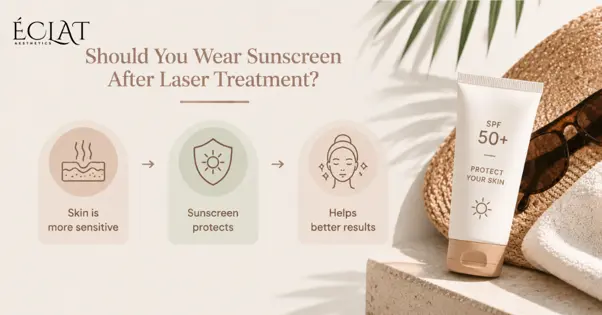
Yes. Sunscreen is one of the most important parts of post laser skin care.
A broad-spectrum sunscreen helps protect the skin from both UVA and UVB radiation. Your provider may recommend a specific sunscreen based on your treatment and skin type.
In general, look for:
- Broad spectrum protection
- SPF 30 or higher
- A formula that feels comfortable on your skin
- Water resistance when appropriate
- Ingredients that your skin tolerates well
Sunscreen should be applied as directed and reapplied when you are outdoors.
Remember that sunscreen does not make unlimited sun exposure safe. It should be combined with other forms of protection.
Ready to Plan Your Laser Treatment?
The key is understanding how sun exposure affects your treatment and following the right preparation and aftercare plan. If you are considering laser treatment at Éclat Medical Aesthetics, schedule a consultation to discuss your skin concerns and learn about an appropriate treatment approach.
What Other Sun Protection Should You Use?
Sunscreen is only one part of sun protection.
During the healing period you can also protect your skin by reducing direct exposure.
Consider:
Wear a Hat
A wide brimmed hat can help shade your face and other exposed areas.
Seek Shade
When spending time outdoors try to stay in shaded areas whenever possible.
Wear Protective Clothing
Long sleeves and other protective clothing can reduce direct UV exposure.
Avoid Peak Sun
Try to limit prolonged outdoor exposure when the sun is strongest.
Use Sunglasses
Sunglasses can help protect the delicate skin around the eyes while also protecting your eyes from UV radiation.
These simple habits can be especially useful during summer when outdoor exposure tends to increase.
Is Laser Hair Removal Safe in Summer?
Laser hair removal can be performed during summer for many patients. However, sun exposure remains an important consideration. A recent tan can affect how the laser interacts with the skin. Many providers recommend avoiding tanning before and after treatment.
If you spend a lot of time outside during summer you may need to be especially consistent with sun protection. You should also follow the instructions given for shaving, skin care, and post treatment activities. Laser hair removal treatments are usually performed over multiple sessions. This means sun protection remains important throughout your treatment plan.
How Can You Prepare for a Summer Laser Treatment?
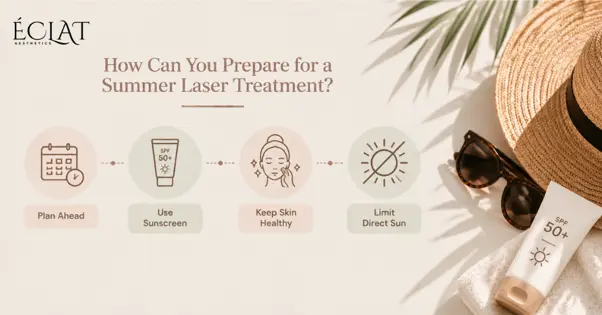
Good preparation starts before your appointment.
1. Tell Your Provider About Recent Sun Exposure
Be honest about tanning vacations, outdoor activities, and sunburns. Your provider needs accurate information to determine whether treatment should proceed.
2. Stop Intentional Tanning
Avoid tanning beds and intentional sun tanning before your treatment.
3. Start Daily Sun Protection
Make sunscreen part of your everyday routine.
4. Plan Around Your Schedule
Think about vacations, swimming, outdoor sports, and other activities that may involve significant sun exposure.
5. Follow Pre Treatment Instructions
Your provider may give you specific instructions based on the laser being used. Following these instructions can help reduce the risk of complications.
What Should You Avoid After Laser Treatment?
Your provider will give you treatment specific aftercare instructions. Depending on the procedure you may be advised to avoid:
- Direct sunlight
- Tanning beds
- Prolonged outdoor exposure
- Excessive heat
- Swimming for a specific period
- Picking or scratching treated skin
- Products that may irritate the skin
Do not assume that your skin is fully recovered simply because it looks normal on the outside. Some treatments continue working beneath the surface while the skin completes its healing process. Advanced therapies like exosome therapy or PRP microneedling can also support deeper skin rejuvenation when paired appropriately.
How Can You Tell If Your Skin Is Ready for Normal Summer Activities?
Your provider is the best person to determine when your skin is ready for normal activities.
Recovery depends on factors such as:
- The type of laser
- Treatment intensity
- Treatment area
- Your skin type
- Your individual healing response
- Whether you developed irritation
- Your level of sun exposure
Do not compare your recovery with someone else's. Two people can have the same treatment and experience different recovery timelines.
Can Sunscreen Prevent All Problems from Sun Exposure?
No. Sunscreen is an important tool, but it does not eliminate every risk associated with UV exposure. After laser treatment you may need to combine sunscreen with shade, protective clothing, and reduced outdoor exposure.
This is especially important during the immediate recovery period. Complementary treatments such as gentle facials or hydrating mini spa services may also help restore moisture during post-treatment recovery. Think of sun protection as part of your treatment plan rather than an optional extra.
Why Summer Laser Treatments Require a Personalized Approach
Laser treatments are not one size fits all. The right approach depends on your skin condition, your skin tone, your treatment goals, the type of laser being used, and your lifestyle.
Your provider should also consider your recent sun exposure. For example, a person who works indoors and rarely spends time outside may have very different sun exposure needs from someone who spends several hours outdoors every day. A personalized consultation helps determine whether summer is an appropriate time for your treatment.
Summer Laser Treatment at Éclat Medical Aesthetics
If you are considering laser treatment during summer, it is important to work with an experienced aesthetic provider who can evaluate your skin and treatment goals. At Éclat Medical Aesthetics, patients can discuss their concerns and learn whether a laser-based treatment is appropriate for their skin and lifestyle.
A consultation allows your provider to consider your recent sun exposure and explain the preparation and aftercare needed for your specific treatment.
Final Thoughts
You do not necessarily have to wait until winter to have a laser treatment. Summer laser treatments can be appropriate for many patients when treatment is selected carefully, and sun exposure is managed properly.
The most important steps are to avoid tanning before treatment, protect your skin after treatment, use broad spectrum sunscreen, and follow your provider's specific instructions. If you are considering a laser treatment this summer, a consultation can help you understand how to prepare and when to schedule your procedure based on your skin and lifestyle.
Find the Right Time for Your Treatment
A professional consultation can help you understand your options. Discuss your upcoming vacations, outdoor activities, and skincare routine with your provider so your treatment schedule at Éclat Medical Aesthetics can be planned around your lifestyle.
Frequently Asked Questions
How long should I avoid the sun before laser treatment?
The recommended period varies by treatment. Many procedures require significant sun avoidance before treatment. Your provider can give you specific instructions based on the laser being used.
Can I get laser treatment if I have a tan?
A recent tan may increase the risk of unwanted reactions with some lasers. Tell your provider about any recent tanning before your appointment.
Can I have laser treatment after a sunburn?
It is generally important to allow sunburned skin to recover before laser treatment. Contact your provider if you develop a sunburn before your appointment.
Should I wait until winter for laser treatment?
Not always. Some treatments may be easier to schedule during seasons with less sun exposure. Others can be performed during summer with appropriate precautions.
What happens if I get too much sun after laser treatment?
Excessive sun exposure can increase irritation and the risk of pigmentation changes after some laser treatments. Follow your aftercare instructions and contact your provider if you notice concerning skin changes.