
If you are exploring regenerative aesthetic treatments for under eye concerns or thinning hair, you may have come across two popular options: platelet rich plasma (PRP) and platelet rich fibrin (PRF). Both treatments use components obtained from your own blood and are designed to support the body's natural repair processes. However, they differ in preparation, composition, and the way they release growth factors.
Choosing between PRF and PRP depends on your treatment goals. Someone concerned about fine lines and delicate under eye skin may have different needs from someone experiencing hair thinning or reduced hair density. Although both treatments have promising applications, neither is guaranteed to produce the same results for everyone.
At Éclat Medical Aesthetics in Alpharetta, understanding the differences between regenerative treatments can help you make informed decisions about your skincare and aesthetic goals. Before choosing a treatment, it is important to understand what PRF and PRP do, how they compare, and what current evidence says about their effectiveness.

What Is PRP (Platelet Rich Plasma) Treatment?
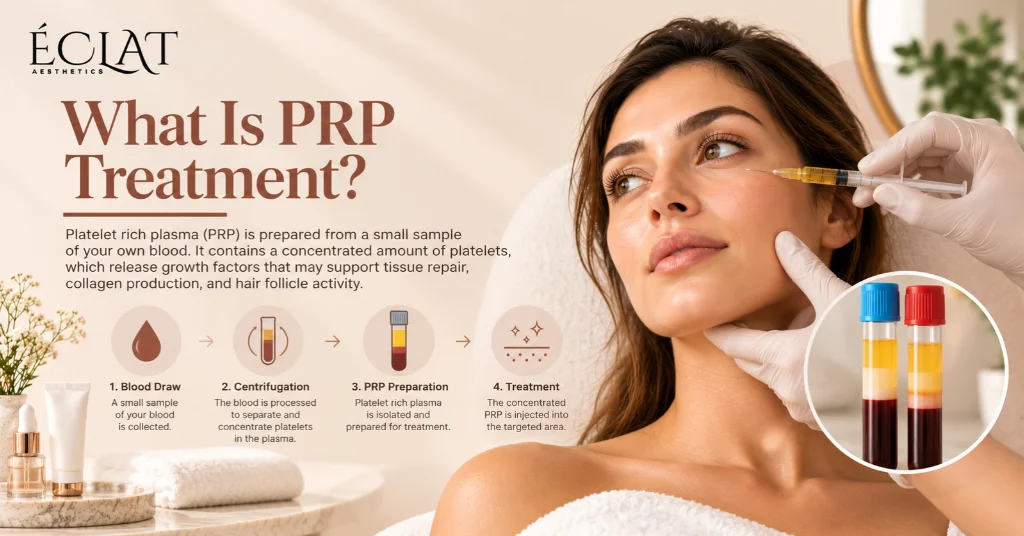
Platelet rich plasma, commonly known as PRP, is prepared from a small sample of the patient's blood. The blood is processed using a centrifuge to separate and concentrate platelets within the plasma.
Platelets are best known for their role in blood clotting, but they also contain signalling molecules and growth factors involved in tissue repair. When concentrated platelets are introduced into a selected treatment area, they may support cellular activity and tissue remodelling.
PRP has been studied for several applications, including hair loss and facial rejuvenation. In aesthetic settings, it may be used to address selected concerns such as thinning hair, fine lines, and changes in skin texture.
The preparation method matters because platelet concentration, processing protocols, and the final product can vary between systems. These differences may influence treatment outcomes.
How Does PRP Work?
PRP delivers a concentrated preparation of platelets to the treatment area. The growth factors and signalling molecules released by platelets may influence processes involved in tissue repair and hair follicle activity.
For hair restoration, PRP is intended to support existing hair follicles and may help improve hair density in selected people with certain types of hair loss.
For under eye rejuvenation, PRP may help improve aspects of skin texture and pigmentation. However, it cannot reliably correct every cause of dark circles, deep hollows, or under eye puffiness.
PRP is generally performed as a series of treatments rather than a single appointment. The number of sessions and the timing between them depend on the treatment area, the individual's response, and the provider's recommendations.
What Is PRF (Platelet Rich Fibrin) Treatment?
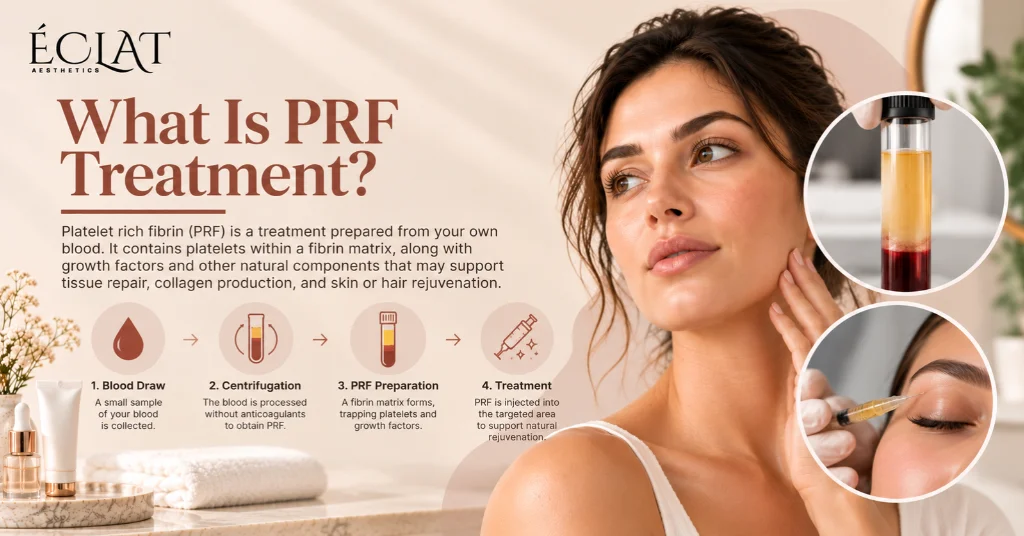
Platelet rich fibrin, or PRF, is another treatment prepared from a patient's own blood. Like PRP, it contains platelets and biological signalling molecules. However, its preparation process differs.
PRF is generally prepared without the anticoagulants used in many PRP protocols. Depending on the specific preparation method, it forms a fibrin matrix that can help retain platelets and release growth factors over time.
This gradual release is one reason PRF has attracted interest in regenerative aesthetic treatments. Some preparations may also contain white blood cells and other components involved in the body's natural repair processes.
PRF is available in different forms. Injectable PRF is designed for use in selected treatment areas, while other preparations may form a more solid fibrin matrix. The form used depends on the intended application.
How Does PRF Work?
PRF provides platelets within a fibrin structure that may influence the release of growth factors and other signalling molecules. Researchers are studying how these characteristics affect skin quality, tissue remodelling, and hair growth.
For under eye treatments, PRF may be considered when the goal is to improve fine lines, crepey skin, or overall skin texture.
For hair concerns, PRF is being explored to support hair follicles and improve hair density. However, evidence for PRF in hair restoration remains less established than the evidence available for some conventional hair loss treatments.
Although the biological characteristics of PRF are promising, a slower release of growth factors does not automatically mean better clinical results. The treatment's effectiveness depends on the condition being treated, preparation method, and individual response.
PRF vs PRP: What Are the Main Differences?
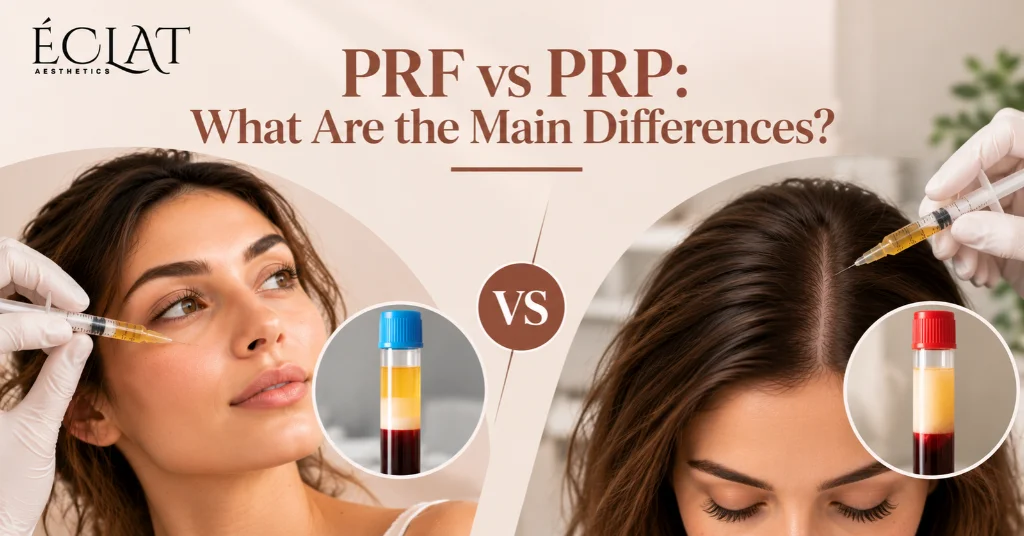
Both treatments use blood derived components, but they are not identical.
| Feature | PRP | PRF |
|---|---|---|
| Full name | Platelet rich plasma | Platelet rich fibrin |
| Preparation | Commonly uses anticoagulants and centrifugation | Generally prepared without anticoagulants |
| Composition | Platelet concentrated plasma | Platelets within a fibrin-based structure |
| Growth factor release | Depends on preparation and activation | May provide more gradual release |
| Under eye applications | Studied for pigmentation and skin quality | Promising for texture and fine lines |
| Hair restoration | Studied for selected types of hair loss | Emerging option with less established evidence |
| Research limitations | Protocols and outcomes vary | Fewer standardized comparative studies |
The most important difference is not simply which treatment contains more growth factors. It is how each preparation behaves and whether the available clinical evidence supports its use for your particular concern.
Neither PRP nor PRF is universally superior. A qualified provider should consider your treatment goals, health history, and the available evidence before recommending either option.
Explore Your Under Eye Treatment Options
Concerned about under eye pigmentation, fine lines, or changes in skin texture? Contact Éclat Medical Aesthetics to discuss your aesthetic goals and explore appropriate options for personalized care.
PRF vs PRP for Under Eyes: Which Works Better?
The under-eye area has thin, delicate skin and is particularly prone to visible changes in pigmentation, texture, and volume. Dark circles may develop for several reasons, including genetics, visible blood vessels, pigmentation, allergies, and shadowing caused by tear trough hollows.
PRP and PRF may support certain aspects of under eye rejuvenation, but neither addresses every cause of dark circles.
PRP for Under Eye Rejuvenation
PRP has been investigated for improving the appearance of under eye pigmentation, fine lines, and skin texture. Some studies report improvements in dark circles, although results vary and the quality of evidence remains mixed.
PRP may be worth discussing when the primary concern involves pigmentation or mild changes in skin quality. However, the outcome depends on why the discoloration is present.
For example, pigmentation related to excess melanin may respond differently from darkness caused by visible blood vessels or shadows beneath the eyes.
PRP is not a reliable substitute for treatments that address significant volume loss or pronounced tear trough hollows. A professional assessment can help determine whether a platelet-based treatment is appropriate.
PRF for Under Eye Rejuvenation
PRF has attracted attention for its potential to improve fine lines, crepey skin, and under eye texture.
Its fibrin structure may allow growth factors to be released gradually, making it an interesting option for regenerative skin treatments. Early research suggests that PRF may improve selected measures of skin quality, but more standardized clinical studies are needed.
PRF may be considered when the main goal is subtle improvement in the appearance and texture of the under-eye area. However, it should not be described as a guaranteed treatment for deep hollows, severe dark circles, or pronounced under eye bags.
The thin skin around the eyes also requires careful technique and appropriate provider expertise. Bruising, swelling, tenderness, and other complications are possible with injections in this area.
PRF vs PRP for Hair Restoration: Which Works Better?
Hair thinning can develop for several reasons, including hereditary hair loss, hormonal changes, nutritional deficiencies, certain medications, and medical conditions. Identifying the cause is an important first step because a regenerative treatment may not address the underlying problem.
PRP has been studied more extensively than PRF for selected forms of hair loss, particularly androgenetic alopecia, which is commonly known as pattern hair loss.
PRF is also being investigated for hair restoration, but its clinical evidence base is less developed. Neither treatment should be considered a guaranteed way to regrow hair.
PRP for Hair Growth
PRP is used in some clinical settings to support hair growth in selected patients. The proposed mechanism involves signalling molecules that may influence hair follicle activity and the hair growth cycle.
Some studies have reported improvements in hair density and thickness following a series of PRP treatments. However, results vary, and differences in preparation, injection technique, treatment frequency, and patient selection make comparisons difficult.
PRP is generally more likely to be considered for people who have thinning hair and functioning follicles than for areas where follicles have been permanently lost.
A medical evaluation can help determine whether PRP is suitable and whether other treatments should be considered alongside it.
PRF for Hair Growth
PRF is an emerging option for people interested in regenerative approaches to hair thinning. Its fibrin matrix and growth factor release characteristics have generated interest in how it may influence the scalp environment.
However, promising biological mechanisms do not necessarily translate into superior hair growth in clinical practice. High-quality evidence directly comparing PRF with PRP for hair restoration remains limited.
PRF may be discussed as an option in selected cases, but it should not be presented as more effective than PRP without strong comparative evidence.
A qualified healthcare professional should assess the cause and pattern of hair loss before recommending a treatment plan.
Are PRP and PRF Safe? Side Effects and Risks
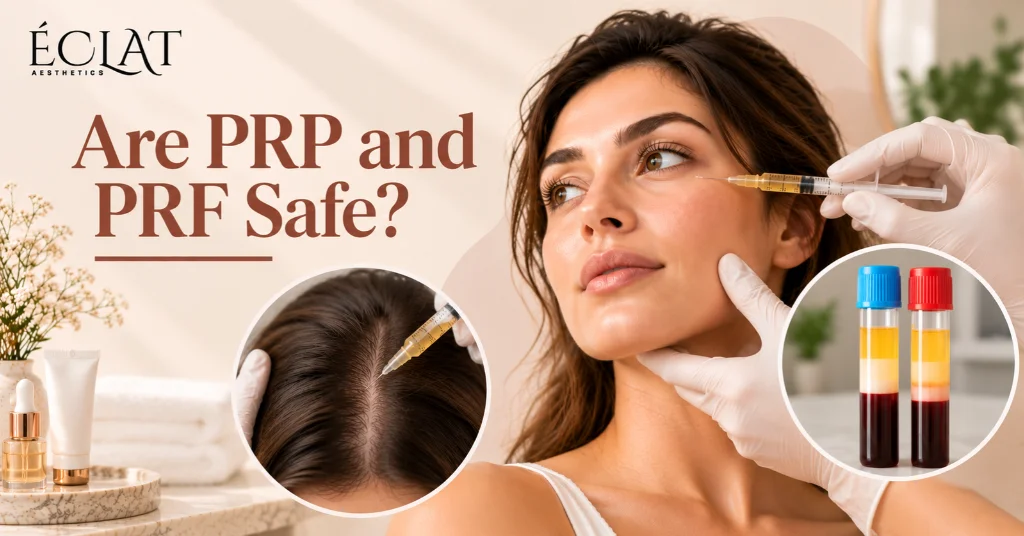
Because PRP and PRF are prepared from the patient's own blood, they reduce certain risks associated with introducing unrelated biological material. However, using a person's own blood does not make an injectable treatment completely risk free.
Possible side effects include temporary swelling, bruising, tenderness, redness, and discomfort at the treatment site. Infection, injury to surrounding structures, and other complications are also possible when injections are not performed appropriately.
The under-eye region requires particular care because of its delicate anatomy. Treatment should be performed by a qualified professional with appropriate training and experience.
Before either procedure, discuss your medical history, medications, bleeding concerns, and any relevant health conditions with the treating clinician. Not everyone is a suitable candidate.
You should also ask how the blood is collected and processed, what equipment is used, and how the treatment is performed safely.
Personalized Regenerative Treatments in Alpharetta at Éclat Medical Aesthetics
Choosing between PRF and PRP begins with understanding what you want to address. Under eye discoloration, fine lines, and hair thinning have different causes and may require different treatment strategies.
At Éclat Medical Aesthetics in Alpharetta, Georgia, personalized aesthetic care can help you explore appropriate options for your skin and overall treatment goals. If you are considering regenerative treatments, discussing your concerns with a qualified provider can help clarify expected outcomes, limitations, and whether a particular procedure is suitable.
The aim is to make an informed decision based on your individual needs rather than choosing a treatment simply because it is newer or described as more advanced.
Learn More About PRP Hair Restoration Options
If you are concerned about hair thinning, understanding the underlying cause is an important first step. Arrange a consultation with an appropriate healthcare professional to discuss your concerns and learn which treatments may be suitable.
Frequently Asked Questions About PRF vs PRP
What is the main difference between PRF and PRP?
PRP uses platelet concentrated plasma prepared from the patient's blood, typically with an anticoagulant. PRF is generally prepared without anticoagulants and contains platelets within a fibrin-based structure. Both deliver biological signalling molecules, but their preparation and release characteristics differ.
Is PRF better than PRP for under eyes?
Not necessarily. PRF may help improve fine lines and skin texture, while PRP has been studied more extensively for under eye pigmentation. Current evidence does not establish one treatment as consistently superior for every under-eye concern.
Is PRP or PRF better for hair growth?
PRP has a more established research base for selected types of hair loss, particularly pattern hair loss. PRF is a developing option, but more comparative research is needed to determine its effectiveness. A professional assessment can help identify an appropriate treatment.
Can PRF remove dark circles permanently?
No. PRF may improve certain aspects of under eye skin quality, but it cannot guarantee permanent removal of dark circles. Results depend on whether darkness is caused by pigmentation, visible blood vessels, thin skin, or structural shadows.
How long do PRP and PRF results last?
Results vary according to the treatment area, individual response, and underlying concern. Improvements may gradually diminish over time, and maintenance treatments may be considered. Neither treatment guarantees permanent results.
How many sessions of PRP or PRF are needed?
Several sessions may be recommended, depending on the condition being treated and the treatment protocol. Under eye rejuvenation and hair restoration may require different schedules. Your provider should explain the recommended course and maintenance expectations before treatment.