
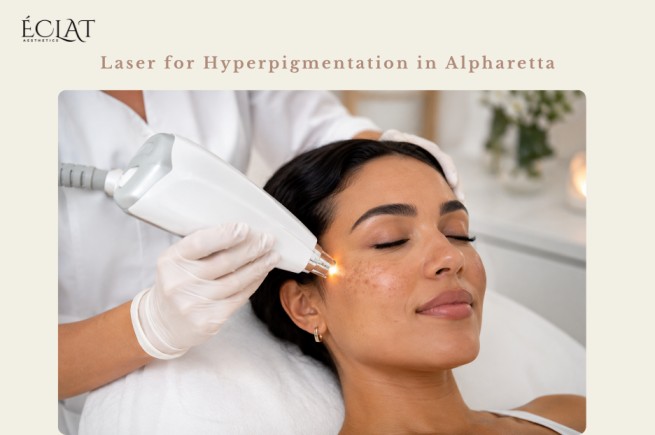
Hyperpigmentation is one of the most common skin concerns affecting people of all ages and skin types. Whether it appears as small sunspots, lingering acne marks, melasma, or large patches of uneven skin tone, unwanted pigmentation can make your complexion look dull and aged. While these discolorations are usually harmless, they can have a significant impact on self confidence and often prove resistant to even the most expensive skincare products.
At Éclat Medical Aesthetics in Alpharetta, we believe that every patient's skin tells a different story. That is why every laser treatment begins with a comprehensive consultation to identify the underlying cause of pigmentation and create a personalized treatment plan.
If you have been wondering whether laser treatment can help reduce your dark spots and uneven skin tone, understanding how hyperpigmentation develops and how laser technology works is the first step toward achieving healthier, more radiant skin.
Understanding Hyperpigmentation
Hyperpigmentation is a condition in which certain areas of the skin become darker than the surrounding tissue due to an increase in melanin production. Melanin is the natural pigment responsible for giving your skin, hair, and eyes their color. When the body produces excess melanin in response to various triggers, dark patches or spots can develop.
Hyperpigmentation may appear gradually over time or develop after inflammation or injury. While it is not dangerous, many people seek treatment because it affects the overall appearance of their complexion.
The appearance of hyperpigmentation varies from person to person. Some individuals develop isolated brown spots, while others experience larger areas of discoloration that spread across the face. The cheeks, forehead, nose, chin, and upper lip are among the most affected areas because they receive frequent sun exposure.
Proper diagnosis is essential because different types of pigmentation respond differently to treatment. Identifying the underlying cause allows your provider to recommend the safest and most effective treatment approach.
What Causes Dark Spots and Uneven Skin Tone?
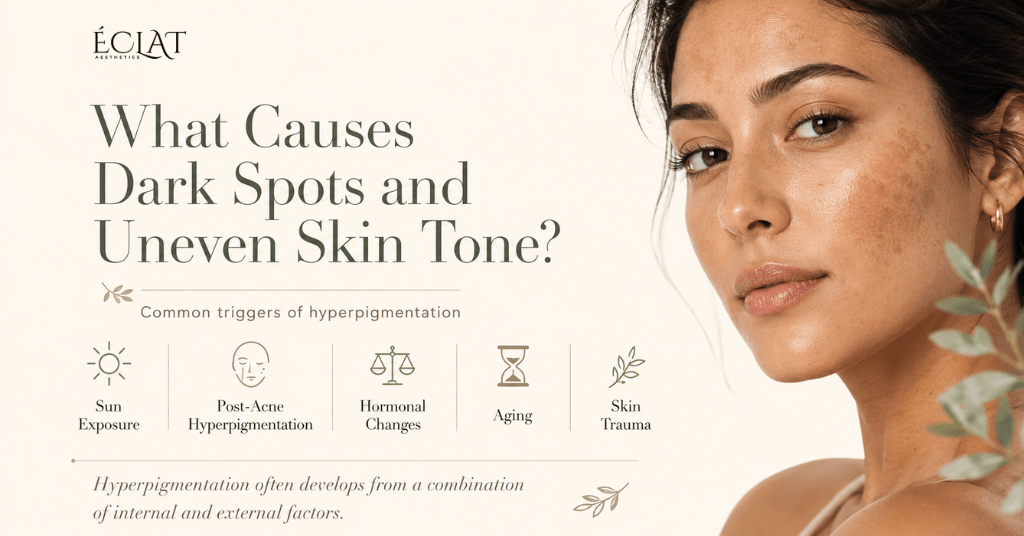
Hyperpigmentation can develop for many different reasons. In many cases, several factors work together to create persistent discoloration.
Sun Exposure
One of the leading causes of hyperpigmentation is cumulative sun damage. Every time your skin is exposed to ultraviolet radiation, it produces melanin as a natural defense mechanism. Over time, repeated exposure causes pigment to collect unevenly, resulting in sunspots and age spots.
These spots often become more noticeable as we get older because years of sun exposure gradually accumulate beneath the surface of the skin.
Post Acne Hyperpigmentation
Acne can leave behind more than temporary blemishes. After inflammation subsides, many people notice dark marks where breakouts once existed. This condition, known as post inflammatory hyperpigmentation, is especially common in individuals with medium to deeper skin tones.
Although these marks may eventually fade on their own, the process can take many months or even years without treatment.
Hormonal Changes
Hormonal fluctuations can trigger increased melanin production, resulting in a condition known as melasma. Melasma commonly appears as symmetrical patches of brown or gray discoloration on the cheeks, forehead, bridge of the nose, and upper lip.
Pregnancy, birth control medications, and hormone replacement therapy are common contributors. Sun exposure often makes melasma more noticeable.
Aging
As skin ages, years of ultraviolet exposure begin to appear in the form of age spots. These flat brown spots develop gradually and are among the most common pigmentation concerns treated with laser technology.
Skin Trauma
Any injury that causes inflammation may lead to temporary pigmentation changes. Cuts, burns, cosmetic procedures, insect bites, and certain skin conditions can all stimulate excess melanin production during the healing process.
Common Types of Hyperpigmentation
Understanding the different forms of pigmentation helps determine which treatment approach may provide the best results.
Sunspots
Also known as solar lentigines, sunspots are caused by prolonged ultraviolet exposure. They typically appear on the face, chest, shoulders, and hands.
Age Spots
Although similar to sunspots, age spots become increasingly common with advancing age because of accumulated environmental damage.
Melasma
Melasma produces larger patches of pigmentation and often requires a combination of laser treatment, topical skincare, and diligent sun protection for optimal improvement.
Post Inflammatory Hyperpigmentation
This form of pigmentation develops after inflammation caused by acne, eczema, injuries, or certain cosmetic treatments.
Freckles
Freckles are genetic but often become darker and more noticeable following sun exposure.
How Laser Treatment Works for Hyperpigmentation
Laser technology works by delivering carefully controlled energy into the skin where excess pigment is located. The laser selectively targets melanin without damaging the surrounding tissue.
When the laser energy reaches the pigmented area, the concentrated melanin absorbs the light energy. This breaks the pigment into tiny particles that are gradually removed by the body's natural healing processes.
Over the following weeks, the treated pigmentation fades while healthier, more evenly toned skin becomes visible.
One of the greatest advantages of laser treatment is its precision. Instead of affecting the entire skin surface, the laser specifically targets unwanted pigment while preserving the surrounding healthy skin.
Depending on the laser technology selected, treatment may also stimulate collagen production beneath the skin. Increased collagen helps improve skin texture, firmness, and overall skin quality, providing benefits beyond pigment reduction alone.
What Types of Pigmentation Can Laser Treat?
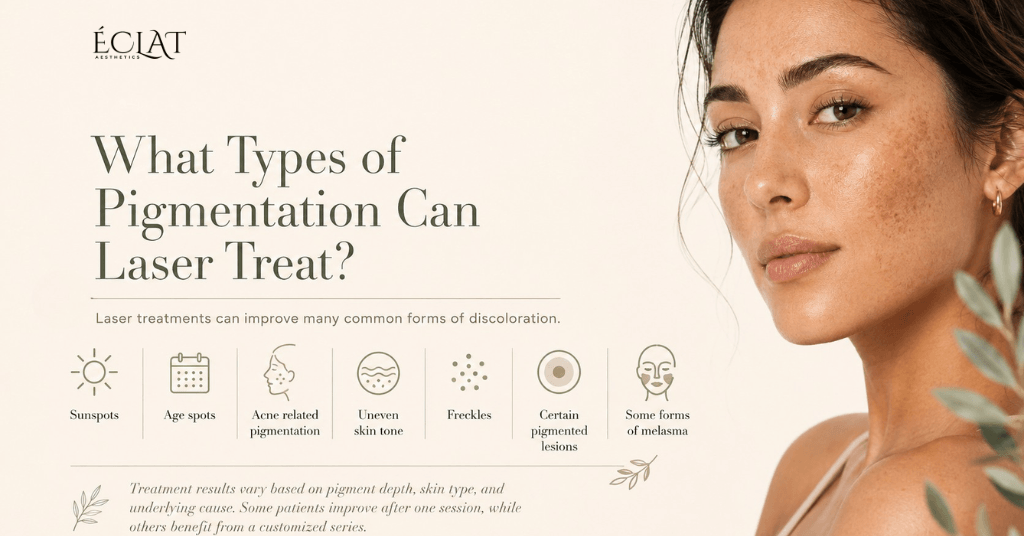
Laser treatments are highly versatile and can improve many forms of discoloration.
Patients commonly seek laser treatment for:
- Sunspots
- Age spots
- Acne related pigmentation
- Uneven skin tone
- Freckles
- Certain pigmented lesions
- Some forms of melasma
The effectiveness of treatment depends on several factors, including the depth of pigmentation, skin type, and the underlying cause of discoloration.
While some patients notice significant improvement after a single session, others may require a customized treatment series to achieve their desired results.
Benefits of Laser Treatment for Hyperpigmentation
Laser treatment offers several advantages compared to relying solely on topical skincare products.
Some of the most significant benefits include:
More Even Skin Tone
By reducing concentrated areas of excess pigment, laser treatment creates a smoother, more balanced complexion.
Brighter Complexion
As unwanted pigmentation fades, the skin often appears healthier, fresher, and more radiant.
Improved Skin Texture
Many laser treatments stimulate collagen production, helping improve overall skin quality while reducing pigmentation.
Precision Treatment
Laser technology targets specific areas of discoloration while leaving surrounding tissue largely unaffected.
Minimal Downtime
Most patients can return to their normal activities shortly after treatment with only mild temporary redness or swelling.
Long Lasting Results
With proper skincare and daily sun protection, laser treatment can provide long lasting improvement in pigmentation concerns.
Who Is a Good Candidate for Laser Hyperpigmentation Treatment?
Laser treatment may be an excellent option for individuals who want to improve the appearance of stubborn pigmentation that has not responded well to topical skincare alone.
You may be a good candidate if you:
- Have sunspots or age spots
- Have acne related dark marks
- Want a brighter, more even complexion
- Are in good overall health
- Have realistic expectations
- Are committed to protecting your skin from future sun damage
The best way to determine whether laser treatment is appropriate for your skin is through a professional consultation. During your visit, your provider will evaluate your skin type, discuss your concerns, review your medical history, and recommend a customized treatment plan based on your individual goals.
Schedule Your Personalized Laser Consultation
At Éclat Medical Aesthetics in Alpharetta, our experienced providers create customized laser treatment plans designed to safely reduce dark spots, improve uneven skin tone, and restore a brighter, healthier complexion.
What to Expect During Your Laser Treatment
Knowing what to expect before your appointment can help you feel more comfortable and confident about the treatment process. At Éclat Medical Aesthetics, every laser procedure begins with a thorough consultation to ensure your treatment is tailored to your unique skin concerns and goals.
During your consultation, your provider will evaluate your skin, discuss your medical history, identify the type of pigmentation you have, and determine whether laser treatment is the most appropriate option. Factors such as your skin tone, the depth of pigmentation, sun exposure habits, and previous treatments are all considered when creating your personalized treatment plan.
On the day of your procedure, your skin will be cleansed to remove any makeup, oil, or skincare products. Protective eyewear will be provided before the laser treatment begins. Depending on the treatment area and the laser technology being used, a topical numbing cream may be applied to improve comfort.
As the laser passes over the treatment area, you may feel a mild warming sensation or a light snapping feeling against the skin. Most patients tolerate the procedure very well, and treatments typically last between twenty and forty-five minutes.
Once the session is complete, your provider will review aftercare instructions and recommend products that support healing and help maintain your results.
Recovery and Aftercare
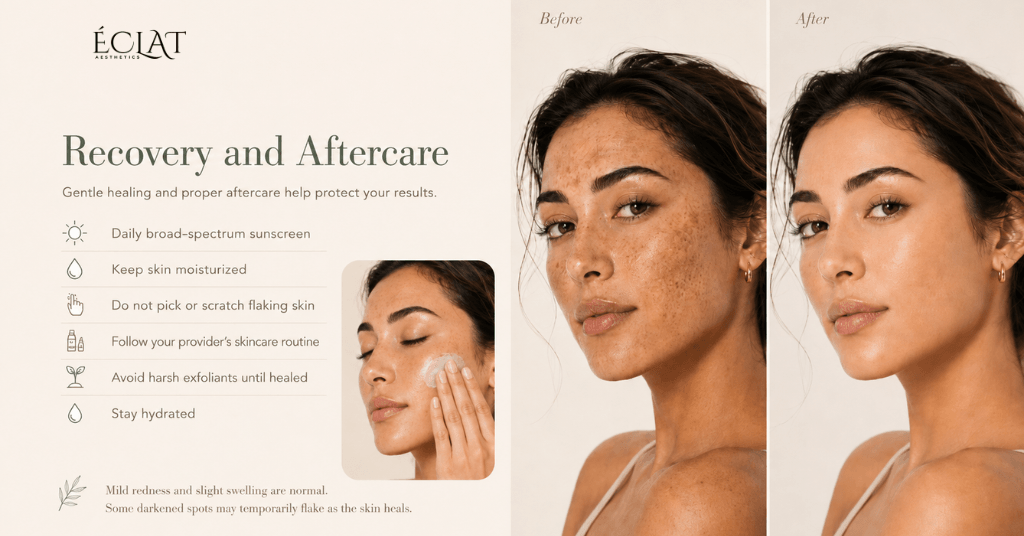
Recovery following laser treatment for hyperpigmentation is generally straightforward. The amount of downtime depends on the laser used, the intensity of treatment, and your individual healing response.
Immediately after treatment, it is common to experience mild redness and slight swelling. Some treated spots may temporarily appear darker before gradually flaking away over the following days. This is a normal part of the healing process as the fragmented pigment rises to the surface and naturally sheds.
Most patients return to normal daily activities within a day, although your provider may recommend avoiding strenuous exercise, excessive heat, swimming pools, and direct sun exposure for several days.
Proper aftercare plays an important role in achieving optimal results.
Helpful aftercare recommendations include:
- Apply sunscreen with broad spectrum protection every day.
- Keep the treated skin moisturized.
- Avoid picking or scratching flaking skin.
- Follow the skincare routine recommended by your provider.
- Avoid harsh exfoliants until your skin has fully healed.
- Stay well hydrated to support healthy skin recovery.
Following these instructions helps minimize irritation while protecting your investment in your skin.
How Many Laser Treatments Will You Need?
One of the most common questions patients ask is how many sessions are necessary.
The answer depends on several factors, including:
- The type of pigmentation
- The depth of discoloration
- Your skin type
- Your body's natural healing response
- Your desired level of improvement
Some superficial sunspots respond very well after just one or two sessions. More extensive pigmentation, including melasma or widespread sun damage, often requires a series of three to six treatments scheduled several weeks apart.
Your provider will monitor your progress throughout the treatment process and adjust your plan if necessary to help you achieve the best possible outcome.
Because laser treatment works by allowing your body to gradually eliminate fragmented pigment, improvements continue to develop over several weeks after each session.
Can Laser Prevent Future Hyperpigmentation?
Laser treatment effectively removes existing pigmentation, but maintaining your results requires ongoing skin protection.
If the underlying cause of pigmentation continues, new discoloration may eventually develop. Sun exposure remains the most significant contributor to recurring pigmentation.
Fortunately, there are several steps you can take to protect your results.
Daily sunscreen is one of the most effective ways to prevent future pigmentation. Wearing hats, seeking shade during peak sunlight hours, and following a professional skincare routine can also reduce the likelihood of new dark spots forming.
Patients who practice consistent sun protection often enjoy clearer, brighter skin for years after completing their treatment series.
Why Choose Éclat Medical Aesthetics in Alpharetta?
Choosing where to receive laser treatment is just as important as choosing the treatment itself. Successful pigmentation correction requires advanced technology, clinical expertise, and a personalized approach that considers every aspect of your skin.
At Éclat Medical Aesthetics, we believe no two patients should receive identical treatment plans. Every consultation begins with a detailed skin assessment that allows our experienced providers to understand your concerns, evaluate your skin condition, and recommend the most effective course of treatment.
Our focus is not simply reducing pigmentation but helping patients achieve healthier, brighter, and naturally radiant skin while maintaining the highest standards of safety and patient care.
From your initial consultation through your final follow up appointment, our team is committed to providing a comfortable experience and results that enhance your natural beauty.
Reveal Brighter, More Even Skin
If you are ready to reduce dark spots, improve uneven skin tone, and restore your skin's natural radiance, Éclat Medical Aesthetics is here to help. Our experienced providers develop customized laser treatment plans designed around your unique skin type and aesthetic goals. Schedule your consultation today to discover how advanced laser technology can help you achieve healthier, smoother, and more confident looking skin.
Start Your Journey to Radiant Skin
If you are ready to address stubborn pigmentation and discover what advanced laser treatment can do for your skin, schedule your consultation with Éclat Medical Aesthetics in Alpharetta today.
Frequently Asked Questions
Can laser remove dark spots permanently?
Laser removes existing pigmentation, but new spots can develop without proper sun protection.
Is laser treatment painful?
Most patients experience only mild discomfort that lasts during the procedure.
When will I see results?
Many patients begin noticing improvement within several weeks as the treated pigment naturally fades.
Can laser treat acne marks?
Yes. Laser treatment can significantly improve many types of post acne hyperpigmentation.
Is there downtime?
Most patients experience only mild redness or swelling that resolves within a few days.