
A chemical peel is one of the most effective treatments for improving skin texture, tone, and overall appearance. By applying a specialized solution to the skin, chemical peels encourage controlled exfoliation and stimulate the renewal process, revealing smoother, brighter, and healthier looking skin. Whether you are addressing fine lines, uneven pigmentation, acne scars, dullness, or rough texture, a customized chemical peel can help refresh and rejuvenate your complexion.
However, achieving beautiful results does not end when your treatment session is complete. Proper chemical peel aftercare plays an essential role in protecting your skin, supporting the healing process, and maximizing the benefits of your treatment. The days following a chemical peel are when your skin begins its renewal process, making it important to follow professional instructions and avoid anything that may interfere with recovery.
At Éclat Medical Aesthetics, every chemical peel treatment is customized according to your skin type, concerns, and aesthetic goals. This guide explains what to expect after a chemical peel, including a day-by-day peeling timeline, essential aftercare tips, and the steps you can take to protect your results.
Why Chemical Peel Aftercare Is Important
After a chemical peel, your skin enters a natural renewal phase. The treatment works by removing damaged outer layers of skin, allowing fresh skin cells to appear. During this process, your skin may become more sensitive, dry, or prone to irritation.
Following the correct aftercare routine helps your skin heal properly while reducing the risk of complications such as excessive irritation, prolonged redness, or unwanted pigmentation changes. Your post treatment care routine is just as important as the peel itself because it directly influences how smoothly your skin recovers.
Immediately after treatment, your skin requires gentle care and protection. Avoiding harsh products, protecting your skin from the sun, and following your provider’s recommendations allow your skin to recover while supporting the improvements created by the chemical peel.
Every person's recovery experience is different. Factors such as the type of peel performed, skin sensitivity, treatment depth, and individual healing response can influence how quickly your skin returns to normal. This is why personalized aftercare instructions from an experienced provider are essential.
How Chemical Peels Improve Your Skin
Chemical peels work by applying a carefully selected solution to the skin that encourages controlled exfoliation. This process removes damaged surface cells and stimulates the body’s natural skin renewal response.
As the old skin sheds, a fresher layer underneath becomes visible. Many patients notice improvements in skin brightness, smoothness, and overall complexion after their treatment.
Chemical peels can address a variety of common skin concerns, including uneven skin tone, sun damage, fine lines, acne marks, clogged pores, and rough texture. Depending on your goals, your provider may recommend a specific peel strength and formula designed for your unique skin needs.
The results of a chemical peel continue developing as the skin completes its renewal process. Proper aftercare ensures that your skin receives the support it needs during this important recovery period.
Chemical Peel Recovery Timeline: What to Expect Day by Day
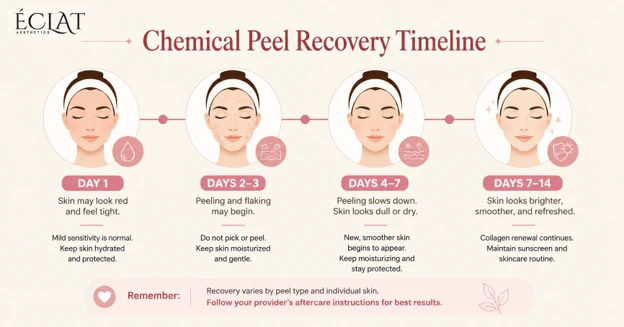
Understanding what happens after a chemical peel can help you feel prepared and confident throughout your recovery. While every person's experience is different, many patients follow a similar general timeline.
Day 1: Immediately After Your Chemical Peel
On the first day after your treatment, your skin may appear slightly red or feel warm, like a mild sunburn. Some patients experience tightness, sensitivity, or a mild tingling sensation.
These effects are normal and indicate that your skin has begun the renewal process. Your provider may recommend specific skincare products to calm and hydrate your skin during this early stage.
During this time, it is important to avoid touching your face unnecessarily and follow all aftercare instructions carefully. Your skin is more sensitive than usual, so gentle care is essential.
Sun protection is especially important immediately after treatment. Avoiding direct sun exposure and applying sunscreen as recommended helps protect your healing skin.
Days 2 to 3: Increased Dryness and Tightness
During the next few days, you may begin noticing increased dryness, tightness, or slight texture changes. Depending on the type of chemical peel you received, your skin may begin showing signs of peeling during this stage.
Many patients describe this phase as similar to having dry skin after spending time in the sun. This is part of the natural exfoliation process as the damaged outer skin layer begins to shed.
It is important not to pick, pull, or manually remove peeling skin. Allowing your skin to shed naturally helps prevent irritation and supports healthier results.
Continuing with gentle hydration and avoiding irritating skincare ingredients are key steps during this phase.
Days 4 to 7: Active Peeling and Skin Renewal
For many patients, the most noticeable peeling occurs between days four and seven. During this time, the outer layer of damaged skin gradually sheds, revealing newer skin underneath.
The amount of peeling varies depending on the strength of the peel and your individual skin response. Some people experience visible peeling, while others notice only mild flaking or dryness.
During active peeling, your skin may feel sensitive, so maintaining a simple skincare routine is important. Gentle cleansing, hydration, and consistent sunscreen use support proper healing.
Avoid exfoliating products, scrubs, retinol, or other strong skincare ingredients until your provider confirms that your skin has fully recovered.
Days 7 to 14: Fresh Skin Appears
As peeling slows down, your skin begins to look smoother and more refreshed. Many patients notice improvements in brightness, texture, and overall complexion during this stage.
Although your skin may appear healthier on the surface, deeper renewal continues beneath the skin. Collagen production and cellular repair may continue for weeks after treatment.
Maintaining good skincare habits during this time helps preserve your results and supports long term skin health.
Protect Your Results with Professional Aftercare Guidance
At Éclat Medical Aesthetics, patients receive personalized guidance before and after treatment to ensure they understand how to care for their skin throughout recovery.
Chemical Peel Aftercare Do’s for Better Results

Following the right aftercare routine after a chemical peel can make a significant difference in how your skin heals and how well you maintain your results. The goal during recovery is to support your skin barrier, minimize irritation, and create the ideal environment for healthy skin renewal.
One of the most important aftercare steps is keeping your skin hydrated. After a chemical peel, your skin may feel dry or tight as the outer layers begin to shed. Using gentle, hydrating skincare products recommended by your provider helps maintain moisture and supports the healing process.
Sun protection is another essential part of chemical peel recovery. Freshly treated skin is more sensitive to ultraviolet exposure, which can increase the risk of irritation and pigmentation concerns. Applying a broad-spectrum sunscreen daily and limiting direct sun exposure helps protect your skin while it heals.
Gentle cleansing is also important during the recovery period. Use a mild cleanser and avoid rubbing or scrubbing the skin. Your skin needs time to repair itself, and aggressive cleansing can interfere with this natural process.
Chemical Peel Aftercare Don’ts to Avoid During Recovery
Knowing what not to do after a chemical peel is just as important as knowing what steps to follow. Certain habits and products can delay healing or cause unnecessary irritation.
Avoid picking or peeling your skin manually. Although it can be tempting to remove flaky areas, allowing your skin to shed naturally helps reduce the risk of irritation, redness, and uneven results.
Avoid harsh skincare products during the recovery period. Ingredients such as retinol, exfoliating acids, scrubs, and strong active treatments may be too aggressive for freshly treated skin. Your provider will let you know when these products can safely be added back into your routine.
Heavy makeup should also be avoided immediately after treatment unless your provider recommends otherwise. Giving your skin time to breathe allows the healing process to continue without unnecessary product buildup.
Activities that cause excessive heat or sweating should be limited during early recovery. Hot showers, saunas, steam rooms, and intense workouts may increase sensitivity and discomfort while your skin is healing.
It is also important to avoid tanning and prolonged sun exposure. Protecting your skin from ultraviolet rays is one of the most effective ways to maintain your chemical peel results.
How to Maintain Your Chemical Peel Results
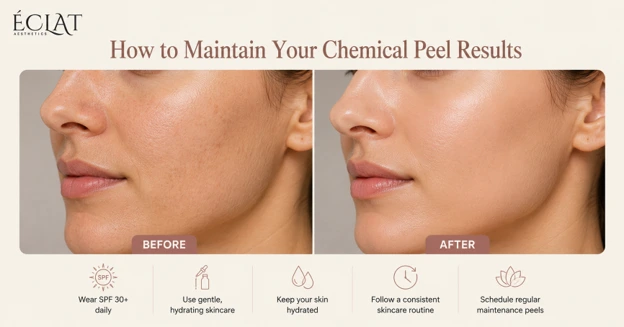
A chemical peel can create noticeable improvements in your skin, but maintaining those results requires consistent care. A healthy skincare routine helps protect your complexion and supports long term skin quality.
Daily sunscreen use is one of the most important habits for preserving your results. Sun exposure contributes to premature aging, uneven pigmentation, and skin damage, so protecting your skin every day helps maintain a smoother and more even complexion.
Hydration is also essential. Well hydrated skin appears healthier and is better able to maintain its natural barrier function. Using appropriate moisturizers and following a professional skincare plan can help extend the benefits of your treatment.
Regular professional treatments may also be recommended depending on your goals. Some patients benefit from a series of chemical peels designed to gradually improve specific concerns such as uneven texture, pigmentation, or signs of aging.
Your provider can create a maintenance plan that fits your skin type and helps you continue enjoying long lasting improvements.
Factors That Affect Chemical Peel Recovery Time
While many patients follow a similar peeling timeline, recovery can vary depending on several factors. Understanding these factors helps you set realistic expectations after your treatment.
The type and strength of your chemical peel can influence how much peeling occurs and how long recovery takes. Superficial peels may involve minimal downtime, while deeper treatments may require a longer healing period.
Your skin type also plays an important role. Some individuals naturally experience more redness or sensitivity, while others recover quickly with minimal visible peeling.
Your skincare habits before and after treatment can also affect your recovery. Patients who follow professional instructions, protect their skin from the sun, and avoid irritating products often experience smoother healing.
Lifestyle factors such as sun exposure, hydration, stress levels, and overall skin health may also influence how your skin responds to treatment.
Why Choose Éclat Medical Aesthetics for Chemical Peels?
Choosing an experienced provider is an important step toward achieving safe and effective chemical peel results. At Éclat Medical Aesthetics, every treatment begins with understanding your skin concerns, goals, and overall complexion.
The team focuses on customized skincare solutions rather than generic treatments. Your chemical peel is selected based on your specific needs, whether you are looking to improve uneven tone, fine lines, acne concerns, dullness, or overall skin texture.
Professional guidance continues beyond the treatment itself. Patients receive personalized aftercare recommendations designed to support healing and protect their results.
With a focus on advanced aesthetic treatments, patient comfort, and individualized care, Éclat Medical Aesthetics helps patients achieve healthier looking skin through customized treatment plans.
Restore Your Skin with Confidence
At Éclat Medical Aesthetics, your skin journey is personalized from consultation through recovery, ensuring you receive the care and guidance needed for beautiful results.
Achieve Beautiful Skin with the Right Chemical Peel Care
Every person's skin responds differently to a chemical peel, which is why professional guidance is so important. A customized treatment plan ensures that your peel strength, skincare recommendations, and recovery instructions are designed specifically for your complexion.
At Éclat Medical Aesthetics, patients receive personalized care focused on achieving natural looking and long-lasting improvements. From your initial consultation to your aftercare guidance, the team is committed to helping you achieve healthier, smoother, and more radiant skin.
Frequently Asked Questions
How long does peeling last after a chemical peel?
Most patients experience peeling for several days, usually between three to seven days. The timeline depends on the type of peel and your individual skin response.
When will I see results after a chemical peel?
Many patients notice brighter and smoother skin after the peeling process is complete. Continued improvements may appear over the following weeks as the skin continues renewing.
Can I wash my face after a chemical peel?
Yes, but you should use a gentle cleanser and avoid scrubbing or irritating the skin. Follow your provider’s specific instructions for cleansing after treatment.
Can I wear makeup after a chemical peel?
It is usually best to avoid makeup immediately after treatment and allow your skin time to recover. Your provider will advise when it is safe to resume cosmetics.
What should I avoid after a chemical peel?
Avoid sun exposure, harsh skincare products, exfoliants, retinol, picking peeling skin, and activities that cause excessive heat or sweating during recovery.