
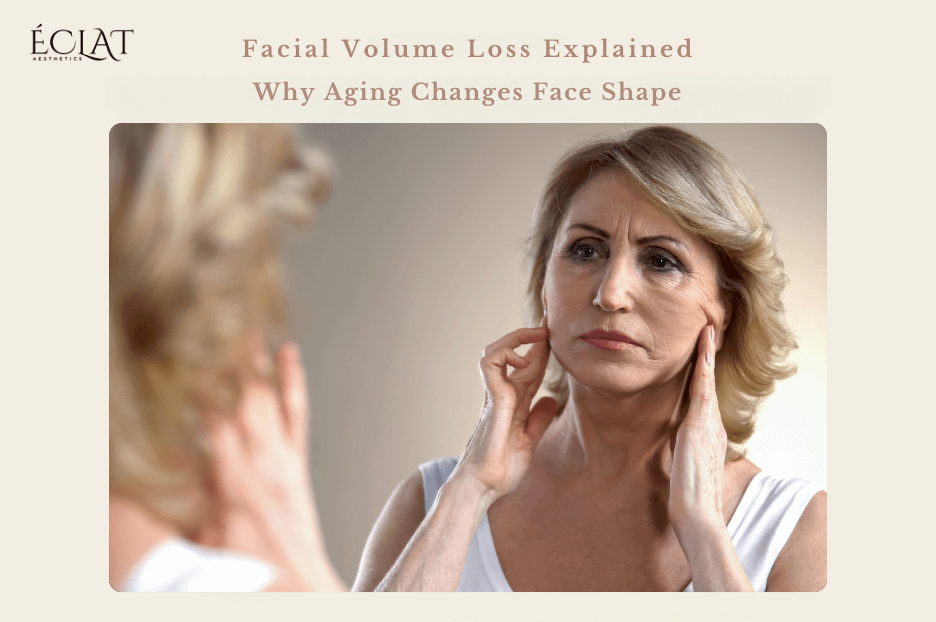
Aging is a natural part of life and as we grow older, our bodies undergo significant physiological shifts. Some of these changes are subtle while others are more noticeable, particularly the progression of facial volume loss. This occurs when the face gradually loses its youthful fullness and structural firmness, leading to skin laxity, hollowed cheeks, and more pronounced nasolabial folds or deep wrinkles. At ÉCLAT Medical Aesthetics, we recognize that these changes can affect both your aesthetic appearance and your self-confidence, making it essential to understand the underlying biological causes.
Facial volume loss is a multi-dimensional process driven by the natural decline of collagen and elastin, the depletion of subcutaneous fat pads, and gradual changes in the underlying bone structure. External factors such as chronic sun exposure, lifestyle choices, and environmental stressors can accelerate this premature aging. By understanding how aging alters the facial contours, individuals can explore effective facial rejuvenation strategies to maintain a refreshed appearance. Whether through medical-grade skincare, non-surgical dermal fillers, or advanced biostimulators, the experts at ÉCLAT provide professional aesthetic procedures tailored to restore your natural volume and vitality.
1. What is Facial Volume Loss?
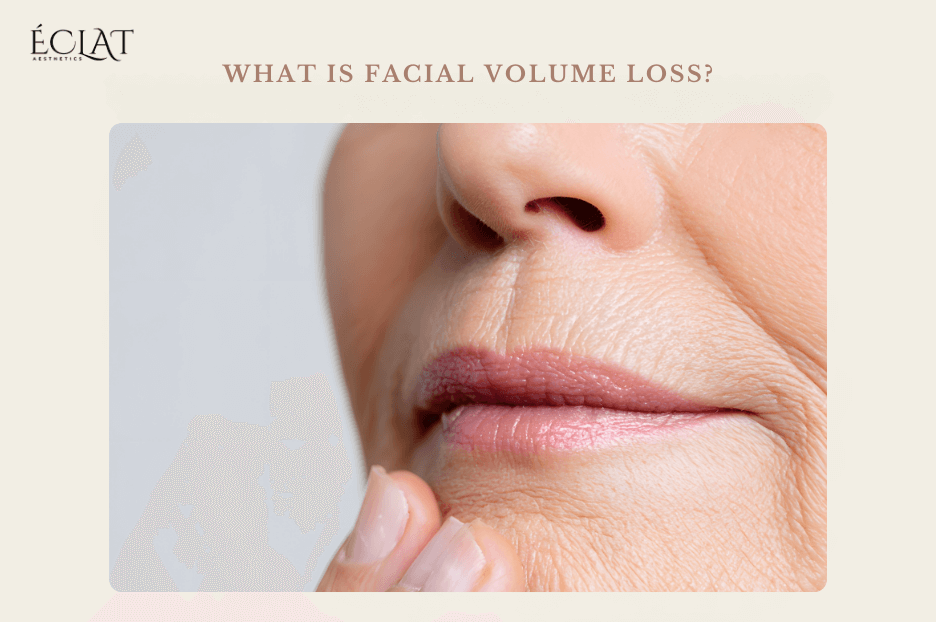
Facial volume loss is the gradual reduction of fat, collagen, elastin, and other vital structural components beneath the skin that give the face its youthful fullness, contour, and definition. This natural process causes changes in the face’s overall shape and structure, often resulting in sagging skin, hollow areas, and more pronounced wrinkles. As we age, the skin becomes thinner, and the fat pads that support soft tissue gradually shrink and shift. This leads to a loss of plumpness, diminished facial contours, and a tired or aged appearance, even in individuals who maintain healthy skin care routines.
Common Signs of Facial Volume Loss:
- Hollow or sunken cheeks that make the face appear gaunt
- Dark circles or hollows under the eyes, often giving a tired look
- Deepening of nasolabial folds (the lines running from the nose to the corners of the mouth)
- Sagging or jowling along the jawline, reducing facial definition
- Thinning lips and loss of natural lip fullness
Facial volume loss is a natural part of aging, but early detection and targeted aesthetic treatments can help restore youthful contours and rejuvenate overall facial appearance.
2. Why Does Aging Cause Facial Volume Loss?
Facial volume loss is a natural part of the aging process, driven by several physiological and lifestyle-related changes:
- Fat Redistribution: As we age, the facial fat that once provided youthful roundness and support gradually shifts or diminishes. This can leave areas like the cheeks, temples, and under-eye region appearing hollow or sunken, altering the overall facial contour.
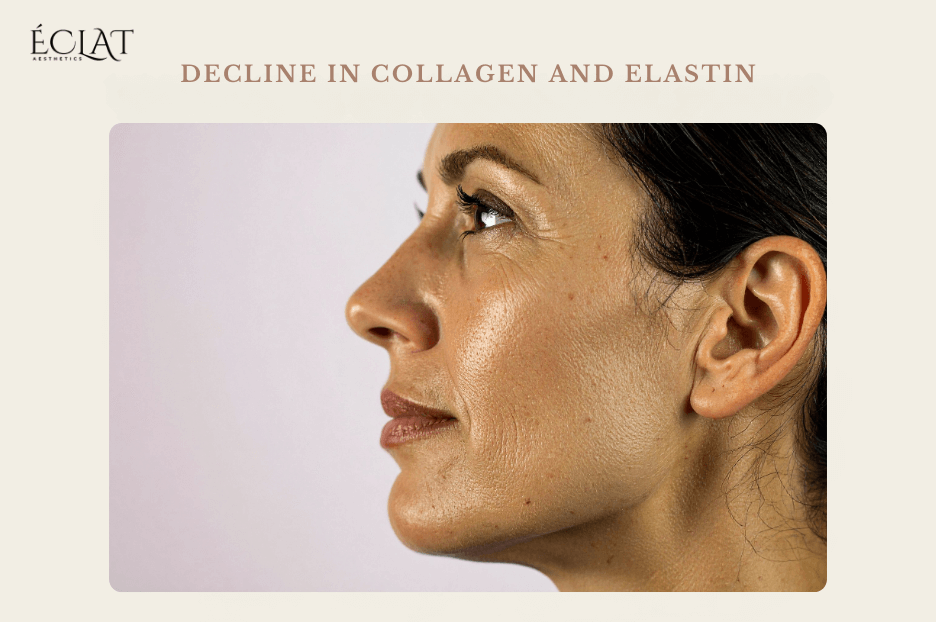
- Decline in Collagen and Elastin: Collagen and elastin are essential proteins that maintain the skin’s firmness, elasticity, and resilience. With age, the body produces less of these proteins, causing the skin to sag, lose its tightness, and develop fine lines and wrinkles.
- Changes in Bone Structure: Facial bones, particularly around the cheeks, jawline, and eye sockets, naturally lose density over time. These structural changes reduce the underlying support for soft tissues, further contributing to the appearance of sagging or hollow areas.
- Environmental and Lifestyle Factors: Sun exposure, smoking, chronic stress, poor nutrition, and lack of sleep can accelerate facial aging. These external factors break down collagen and elastin more quickly, intensifying volume loss and making its effects more noticeable at an earlier age.
Understanding these contributing factors can help guide preventative and corrective treatments that restore youthful contours and maintain a naturally rejuvenated appearance.
3. Common Areas Affected by Facial Volume Loss
Facial volume loss does not occur uniformly, and certain areas of the face are more susceptible, with changes in these regions often the most noticeable:
- Cheeks: The mid-face region tends to lose fat first, leading to sunken cheeks and a hollowed appearance. This can make the face look tired or gaunt.
- Under-eye Area: Thinning skin and diminishing fat beneath the eyes can result in dark circles, puffiness, or hollows, giving a fatigued look even when well-rested.
- Temples: Loss of fat in the temples can cause a concave or hollow appearance, making the upper face look more angular and accentuating signs of aging.
- Jawline and Chin: As the jawline loses definition and skin begins to sag, the lower face can appear less contoured, contributing to the formation of jowls and a less youthful profile.
- Nasolabial Folds: The lines running from the nose to the corners of the mouth deepen over time as underlying fat diminishes, making these folds more pronounced.
Recognizing which areas are most affected by volume loss can help guide aesthetic treatments and interventions, allowing for targeted restoration of youthful contours and balance across the face.
4. How to Prevent or Slow Down Facial Volume Loss
While we can’t stop the aging process, there are several steps we can take to slow down the loss of facial volume:
Healthy Lifestyle
A balanced diet rich in vitamins, antioxidants, and healthy fats can help support skin health and prevent premature aging. Foods high in omega-3 fatty acids, such as salmon and avocados, can help maintain skin elasticity.
Hydration
Staying hydrated is essential for maintaining skin’s plumpness and elasticity. Drink plenty of water throughout the day to help keep your skin hydrated from the inside out.
Sun Protection
UV radiation from the sun accelerates collagen breakdown and increases skin aging. Use a broad-spectrum sunscreen with an SPF of at least 30 every day, even on cloudy days.
Quit Smoking
Smoking damages the skin’s collagen and elastin, leading to premature wrinkles and volume loss. Quitting smoking can significantly reduce the rate at which your skin ages.
Facial Exercises
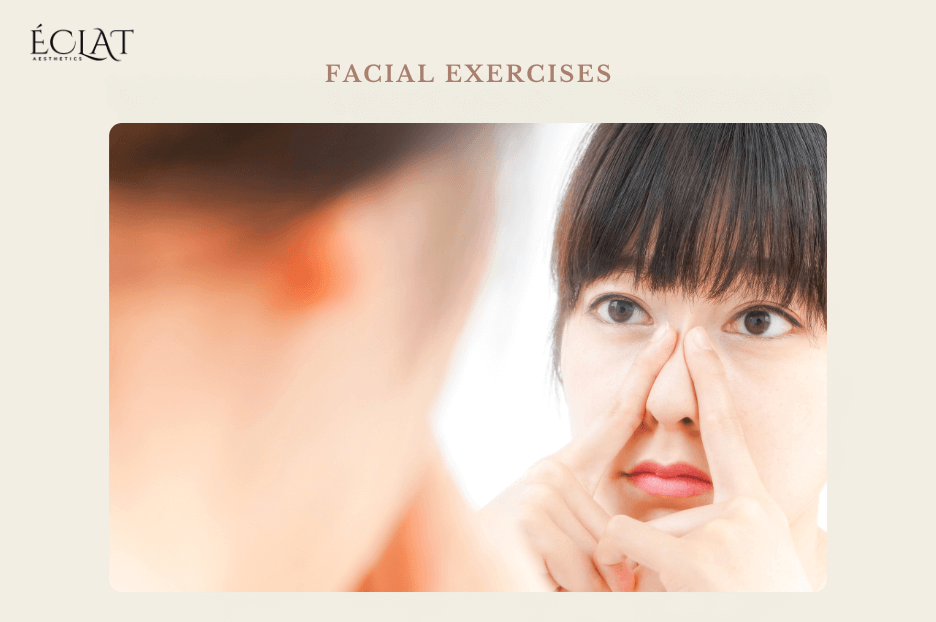
Some people find that facial exercises can help tighten the skin and stimulate circulation. Simple exercises like massaging the face or practicing certain facial movements can potentially help restore some muscle tone and reduce sagging.
Restore Your Youthful Contours Today
Take the first step towards a naturally refreshed look. Book a consultation with our experts and discover how facial contouring and volume restoration can transform your appearance.
5. Treatment Options for Restoring Facial Volume
For those who already have noticeable facial volume loss, there are several treatment options available to restore youthfulness and fullness to the face:
Dermal Fillers
Dermal fillers are one of the most popular and effective treatments for restoring facial volume. These injectable treatments, made from substances like hyaluronic acid, can fill in hollow areas, smooth wrinkles, and enhance facial contours.
- How It Works: Fillers are injected into specific areas of the face to add volume and smooth out wrinkles.
- Popular Areas for Treatment: Cheeks, under-eyes, nasolabial folds, and jawline.
- Pros: Quick procedure with little downtime; results are visible immediately.
- Cons: Results are temporary, lasting between 6 months to 2 years.
Fat Transfer (Fat Grafting)
Fat transfer involves harvesting fat from another part of your body (typically the abdomen or thighs) and injecting it into areas of the face that have lost volume.
- How It Works: The fat is purified and then carefully injected into targeted areas to restore volume.
- Pros: Natural results using your own body fat; long-lasting effects.
- Cons: Requires a more invasive procedure with a longer recovery time.
Surgical Options: Facelift and Neck Lift
For those with significant facial volume loss and skin sagging, surgical options like a facelift or neck lift can help restore the youthful appearance of the face.
- How It Works: The skin is lifted and tightened, and excess fat may be removed to create a more defined face.
- Pros: Long-lasting results.
- Cons: Involves more significant downtime and recovery.
Non-Surgical Treatments
For those who want to avoid surgery, non-invasive treatments like radiofrequency therapy, microneedling, and ultrasound therapy can stimulate collagen production and help restore facial volume.
6. Role of Facial Contouring in Addressing Volume Loss
Facial contouring is the process of enhancing and reshaping facial features to counteract the effects of volume loss. It aims to restore balance, definition, and youthful proportions to the face. This can be achieved through temporary methods such as makeup or through professional aesthetic treatments.
Non-Invasive Facial Contouring
Makeup techniques, including contouring and highlighting, can temporarily redefine facial features. By strategically using shades and highlights, it is possible to create the appearance of fuller cheeks, a more sculpted jawline, and a lifted overall look without any medical procedures.
Professional Facial Contouring
Non-surgical cosmetic treatments, such as thread lifts, Ultherapy, and dermal fillers, offer longer-lasting results. These procedures stimulate collagen production, lift sagging skin, and restore volume in targeted areas. Professional facial contouring helps achieve a natural, rejuvenated appearance while avoiding the risks and downtime associated with surgery.
7. Risks and Considerations for Treatment Options
While treatments for restoring facial volume can be highly effective, it’s important to understand the risks and considerations:
- Dermal Fillers: Although fillers are generally safe, there may be side effects such as bruising, swelling, or infection. Always choose a qualified professional to perform the procedure.
- Fat Transfer: This method can lead to complications such as uneven fat distribution, or the fat may be absorbed by the body over time.
- Surgical Procedures: Facelifts and neck lifts carry higher risks, such as scarring, infection, and long recovery times.
It’s essential to consult with a licensed and experienced professional to discuss your options, understand the risks, and determine the best treatment plan for your needs.
Why Choose ELCAT for Facial Volume Loss and Contouring
ELCAT combines expertise, innovation, and personalized care to deliver natural, youthful results.
- Expert Specialists: Skilled professionals with deep knowledge of facial anatomy ensure safe, precise treatments.
- Customized Plans: Every treatment is tailored to your unique features and goals.
- Advanced Techniques: We use proven, non-invasive and collagen-stimulating procedures for lasting results.
- Natural Results: Subtle enhancements restore youthful contours without an overdone look.
- Patient-Focused Care: From consultation to follow-up, comfort and satisfaction are our top priorities.
Experience the difference with ELCAT, where science meets artistry for a refreshed, confident you.
Embrace Your Youthful Glow Again
Facial volume loss is an inevitable part of the aging process, but it doesn’t mean you have to lose your youthful appearance. By understanding the causes and effects of volume loss, you can take control and implement preventive measures that slow down the process. Whether through healthy lifestyle choices, non-invasive treatments, or advanced cosmetic procedures, there are numerous ways to restore volume, rejuvenate your skin, and enhance your natural beauty. Age gracefully and embrace the confidence of a refreshed, youthful face with the right care and treatments.
Reveal a More Confident You
Don’t let volume loss define your face. Explore personalized treatments at ELCAT that enhance your natural beauty and bring back youthful radiance.
Frequently Asked Questions
What causes facial volume loss as we age?
Facial volume loss occurs due to a combination of factors, including a decrease in fat cells beneath the skin, a reduction in collagen and elastin production, and changes in bone structure. Genetics, sun exposure, smoking, and diet also play significant roles in accelerating these changes.
At what age does facial volume loss start?
Facial volume loss typically begins in the late 20s or early 30s, but the visible effects become more pronounced in the 40s and 50s as collagen and fat cells naturally decrease with age.
Can facial volume loss be prevented?
While it’s not possible to completely prevent facial volume loss, maintaining a healthy lifestyle, using sunscreen, staying hydrated, and following a skincare routine can help slow the process. Avoiding smoking and excessive alcohol also plays a role.
What are the most common areas affected by facial volume loss?
The most common areas affected by facial volume loss are the cheeks, under-eye area, temples, jawline, and nasolabial folds (smile lines), leading to a more hollow or sagging appearance.
How can facial volume be restored?
Facial volume can be restored using treatments like dermal fillers, fat transfer, or even surgical options like facelifts. Non-surgical treatments, such as radiofrequency or ultrasound therapy, can also help stimulate collagen production and restore volume.