
Skin regeneration is one of the most fascinating and transformative processes in aesthetics. As we age, this natural ability slows down dramatically, leading to dullness, fine lines, volume loss, enlarged pores, and uneven texture. Modern aesthetic science has introduced several solutions to boost the skin’s ability to repair, but very few match the cellular-level power of PDRN Therapy.
At Éclat Medical Aesthetics in Alpharetta, GA, PDRN Therapy has become one of our most sought-after regenerative treatments because of its impressive results: firmer skin, faster healing, improved elasticity, and a naturally youthful glow.
This comprehensive blog guide breaks down everything you need to know from the science behind Polynucleotide technology to the benefits, and why Éclat Medical Aesthetics is the leading provider of PDRN Treatment.
What Is PDRN Therapy?
PDRN, short for Polydeoxyribonucleotide, is a scientifically engineered compound derived from the DNA fragments of salmon or trout. These DNA molecules have an exceptional ability to promote tissue repair, increase collagen production, enhance cellular turnover, and accelerate healing.
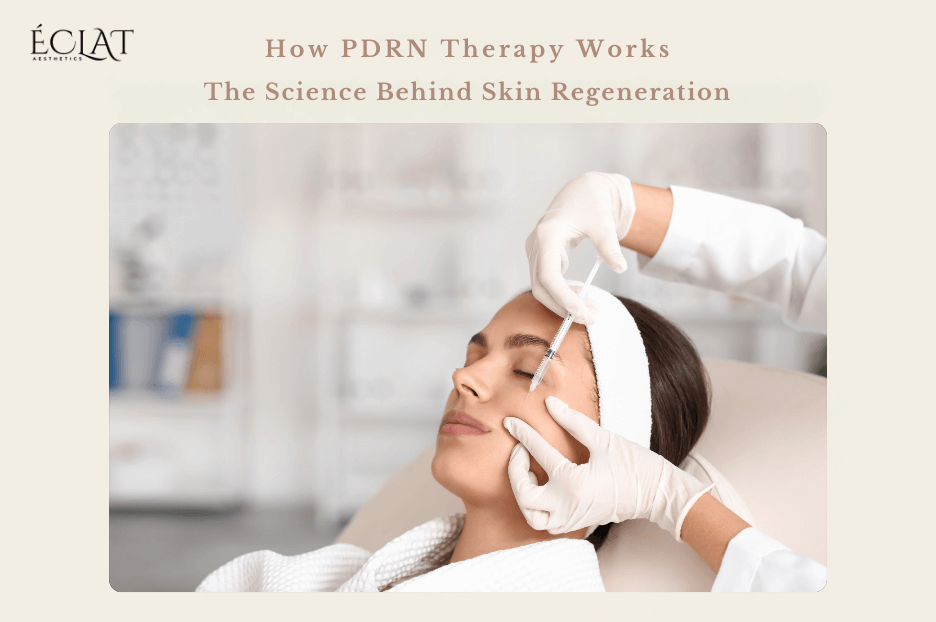
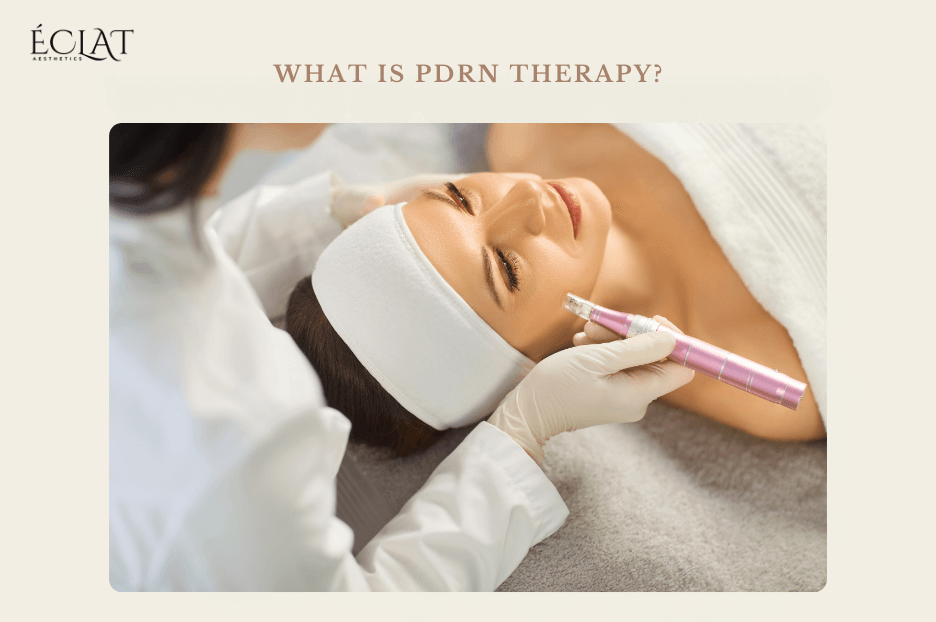
In aesthetic medicine, PDRN is delivered into the skin through injections or micro-needling to trigger intensive regeneration. It’s widely used for:
- Anti-aging and revitalization
- Acne scar repair
- Pigmentation reduction
- Skin healing post-laser or peeling
- Improving hydration and elasticity
- Strengthening the skin barrier
- Reducing redness and inflammation
PDRN belongs to a class of regenerative injectables called polynucleotides, which have become the new global trend in skin quality improvement.
Understanding the Science: How PDRN Works at the Cellular Level
To understand why PDRN (Polydeoxyribonucleotide) is considered a breakthrough in regenerative aesthetics, we must look beyond the surface and explore how it works inside your skin at the cellular and molecular level. Unlike traditional skin boosters that simply hydrate or plump, PDRN influences the fundamental biological processes responsible for skin repair, rejuvenation, and regeneration. Below is the core, science-backed mechanisms that make PDRN Therapy such a powerful tool for anti-aging and healing.
1. Activation of Fibroblasts – Rebuilding the Dermal Matrix
Fibroblasts are the primary cells responsible for producing collagen, elastin, and glycosaminoglycans (including hyaluronic acid). These elements form the structural framework of the dermis, giving skin its firmness, elasticity, and resilience.
With age, fibroblast activity naturally slows, leading to dermal thinning, wrinkle formation, and loss of skin tension.
PDRN directly influences fibroblast metabolism by binding to adenosine A2A receptors on the cell surface. This receptor signal stimulates fibroblasts to re-enter an active state, increasing the synthesis of:
- Type I and III collagen fibers
- Elastin components responsible for skin recoil
- Extracellular matrix (ECM) proteins that support tissue integrity
As a result, the dermal layer becomes thicker, more structured, and more capable of withstanding mechanical stress. Clinically, this translates into improved elasticity, smoother fine lines, and better skin quality.
2. Supporting DNA Repair Pathways and Accelerating Cellular Turnover
PDRN contains polymeric DNA fragments that stimulate the salvage pathway—the cellular mechanism responsible for recycling nucleotides. Instead of relying solely on energy-intensive de novo synthesis, the salvage pathway accelerates the repair of damaged cells by supplying them with readily usable DNA precursors.
This enhanced repair activity leads to:
- Faster regeneration of epidermal cells
- Improved healing of acne scars, post-inflammatory lesions, and procedural trauma
- Strengthening of the skin barrier
By supporting the foundational processes of tissue repair, PDRN allows the skin to recover more efficiently from environmental stress, aging, inflammation, and cosmetic treatments.
3. Enhancing Microcirculation Through Angiogenesis
Healthy, youthful skin depends heavily on oxygen delivery and nutrient-rich blood flow. Clinical studies have shown that PDRN promotes angiogenesis, the formation of new microvessels, by stimulating vascular endothelial growth factors (VEGF).
Improved microcirculation benefits the skin by:
- Enhancing oxygen exchange
- Delivering essential vitamins, nutrients, and growth factors
- Improving overall complexion brightness
- Supporting long-term skin rejuvenation
This increase in vascular density also improves the skin’s metabolic activity, making it more responsive to other skincare treatments and topical therapies.
4. Regulating Inflammation and Calming Hyperreactive Skin
Beyond its regenerative properties, PDRN has a well-recognized anti-inflammatory effect. By downregulating pro-inflammatory cytokines such as TNF-α and IL-1β, it reduces redness, swelling, and irritation at the tissue level. This makes it especially beneficial for individuals with sensitive or inflamed skin conditions, including:
- Rosacea-like redness
- Post-acne inflammation
- Post-procedural erythema (after lasers, peels, or microneedling)
PDRN creates a more balanced and stable skin environment, helping restore comfort, even tone, and a visibly calmer complexion.
5. Deep Hydration by Strengthening the Extracellular Matrix
While hyaluronic acid attracts water to the skin’s surface layers, PDRN works deeper within the dermal matrix. By improving ECM structure and enhancing glycosaminoglycan (GAG) production, it increases the skin’s ability to retain moisture internally.
This translates clinically into:
- Extended hydration longevity
- Smoother, softer texture
- Plumpness from within
- A naturally luminous “glass skin” finish
Hydrated skin is not only more youthful in appearance but also more resilient, healing faster and showing better outcomes from complementary aesthetic treatments.
Putting It All Together: A Multifaceted Regeneration Cascade
When these mechanisms work simultaneously, PDRN creates a powerful regeneration cascade:
- Fibroblasts rebuild structural proteins
- DNA repair pathways restore damaged cells
- Microcirculation nourishes the tissue
- Inflammation is reduced
- Hydration improves at a molecular level
This is why patients experience not only anti-aging benefits but also improvement in scars, texture irregularities, inflammation, dullness, and overall skin vitality.
PDRN doesn’t just beautify the skin—it rebuilds it from within.
See How PDRN Can Transform Your Skin
Curious about how PDRN Therapy can help reduce fine lines, improve texture, and restore radiance? Schedule a personalized consultation with our experts in Alpharetta, GA, and get a tailored plan just for you.
Why PDRN Is Different From Other Skin Boosters (Summary)
PDRN distinguishes itself from traditional skin boosters through its regenerative, rather than purely cosmetic, mode of action. While hyaluronic acid injections, PRP, and mesotherapy primarily hydrate or stimulate mild collagen production, PDRN works at a cellular level to repair, rebuild, and restore the skin.

1. True Regeneration, Not Just Hydration
PDRN activates fibroblasts, supports tissue repair, and enhances the extracellular matrix—leading to improved dermal thickness, reduced fine lines, and better skin resilience.
2. Dual Mechanism: Collagen + DNA Repair
Unlike other injectables, PDRN simultaneously boosts collagen synthesis and promotes DNA repair via the nucleotide salvage pathway, offering broader regenerative benefits.
3. Highly Tolerable for Sensitive Skin
Its anti-inflammatory and biocompatible properties make PDRN suitable even for reactive or compromised skin, minimizing irritation and promoting barrier recovery.
4. Fast Yet Long-Lasting Results
Patients typically see radiance and hydration improvements within 1–2 weeks, with ongoing collagen remodelling providing results that last several months.
5. Enhances Outcomes of Other Aesthetic Treatments
PDRN pairs safely and effectively with microneedling, lasers, peels, and RF procedures, accelerating healing and enhancing results.
In essence, PDRN functions as a comprehensive regenerative therapy, making it distinctly more advanced than standard skin boosters.
Conditions PDRN Therapy Can Treat
PDRN Therapy at Éclat Medical Aesthetics is widely recognized for its ability to address a broad spectrum of skin concerns due to its regenerative, anti-inflammatory, and collagen-stimulating properties. It is especially effective for:
Fine Lines & Wrinkles
PDRN enhances fibroblast activity and collagen synthesis, helping soften fine lines and improve overall skin firmness. Over time, the dermal matrix becomes stronger and more resilient.
Acne Scars & Textured Skin
By accelerating cellular turnover and promoting tissue remodeling, PDRN helps smooth acne scars—particularly atrophic or depressed scars—and refines uneven skin texture.
Dull or Fatigued Skin
Through improved microcirculation and enhanced oxygen delivery, PDRN revitalizes dull complexions, restoring radiance and a healthier skin tone.
Uneven Skin Tone & Pigmentation Irregularities
Its anti-inflammatory action helps reduce redness and post-inflammatory pigmentation, while supporting melanocyte regulation for a more even and balanced complexion.
Dry, Dehydrated Skin
PDRN strengthens the extracellular matrix and boosts glycosaminoglycan production, improving the skin’s natural ability to retain moisture and maintain long-lasting hydration.
Mild Sagging or Loss of Elasticity
By rebuilding collagen and elastin fibers, PDRN enhances skin firmness and elasticity, making it beneficial for areas beginning to show early signs of laxity.
Sensitive, Reactive, or Inflamed Skin
With its cytokine-modulating and barrier-supportive properties, PDRN calms irritation, reduces redness, and restores comfort to sensitive or inflamed skin types.
Post-Treatment Healing and Recovery
PDRN is an excellent adjunct after procedures such as laser resurfacing, chemical peels, microneedling, and RF treatments. It accelerates healing, reduces downtime, and enhances overall treatment outcomes.
Final Thoughts: The Future of Regenerative Aesthetics
PDRN Therapy represents a significant advancement in the field of regenerative aesthetics—ushering in a new era where treatments do not merely mask concerns but actively restore the skin’s innate healing potential. Rather than relying on temporary plumping or superficial hydration, PDRN works at the deepest biological level, reactivating dormant fibroblasts, repairing cellular damage, and rebuilding the structural integrity of the skin from within.
At Éclat Medical Aesthetics in Alpharetta, GA, we are committed to offering science-driven, clinically validated treatments that deliver meaningful and lasting results. Through our specialized expertise and personalized protocols, PDRN Therapy becomes more than just a cosmetic procedure. It becomes a transformative experience focused on true skin health and regeneration.
Take the Next Step Toward Radiant, Regenerated Skin
Discover how PDRN Therapy can transform your skin with a treatment plan tailored to your unique needs. Our expert clinicians at Éclat Medical Aesthetics in Alpharetta, GA, will evaluate your skin and recommend the best regenerative protocol for lasting results.
Frequently Asked Questions
Is PDRN Therapy Safe For Sensitive Skin?
Yes. PDRN is highly biocompatible and has anti-inflammatory properties, making it suitable even for reactive or sensitive skin. It minimizes irritation while supporting skin barrier recovery.
How Long do the Results Last?
Results can last several months, typically 6–9 months, depending on individual skin condition, age, and lifestyle factors. Periodic maintenance treatments are recommended for optimal and sustained outcomes.
Can PDRN be Combined With Other Treatments?
Absolutely. PDRN pairs safely and effectively with microneedling, lasers, chemical peels, RF treatments, and other aesthetic procedures. Its regenerative and anti-inflammatory properties enhance healing and maximize overall results.
How Many Sessions Are Recommended?
Treatment protocols vary based on individual goals, but most patients benefit from 3–5 sessions spaced 2–4 weeks apart. Your provider at Éclat Medical Aesthetics will create a customized plan tailored to your skin’s needs.
Is The Procedure Painful?
PDRN is minimally invasive. Most patients experience only mild discomfort during injection, and topical numbing can be applied if needed. Downtime is minimal, and normal activities can typically be resumed immediately.